
It is Sunday night, your saved folder is full of routines, and Monday already looks too crowded for any of them. For this glow up challenge, start with one small appointment with yourself instead of another shopping list.

I put together 30 small actions you can schedule on an iPad, with six themes and a shorter seven-day version. Choose what fits your life, skip what does not, and keep only a few habits after the month ends. The goal here is a more workable routine and a little room for yourself, not a promised transformation.
Give your glow up challenge a place to live
You can start with a blank page in your existing notebook. If you want separate habit, self-care or goals pages, these three general digital planners offer useful places to keep the plan. They are optional tools; buying one is not day one of the challenge.
TL;DR: These three undated digital planners can hold your own glow-up challenge. Cute Pastel has named 30-day challenge pages; the iPad planner has separate challenge and wellness trackers; Deep Blue offers a monthly habit grid and goals pages. None contains the exact program in this article.
Quick Picks
- Best for a ready-made challenge page: Digital Planner Cute Pastel ( Undated )
- Best for several kinds of tracking: Digital Planner for Ipad, GoodNotes
- Best for a quieter goals notebook: Deep Blue Undated Digital Planner
- Digital Planner Cute Pastel ( Undated ) – Best for a ready-made challenge page
- Digital Planner for Ipad, GoodNotes – Best for several kinds of tracking
- Deep Blue Undated Digital Planner – Best for a quieter goals notebook
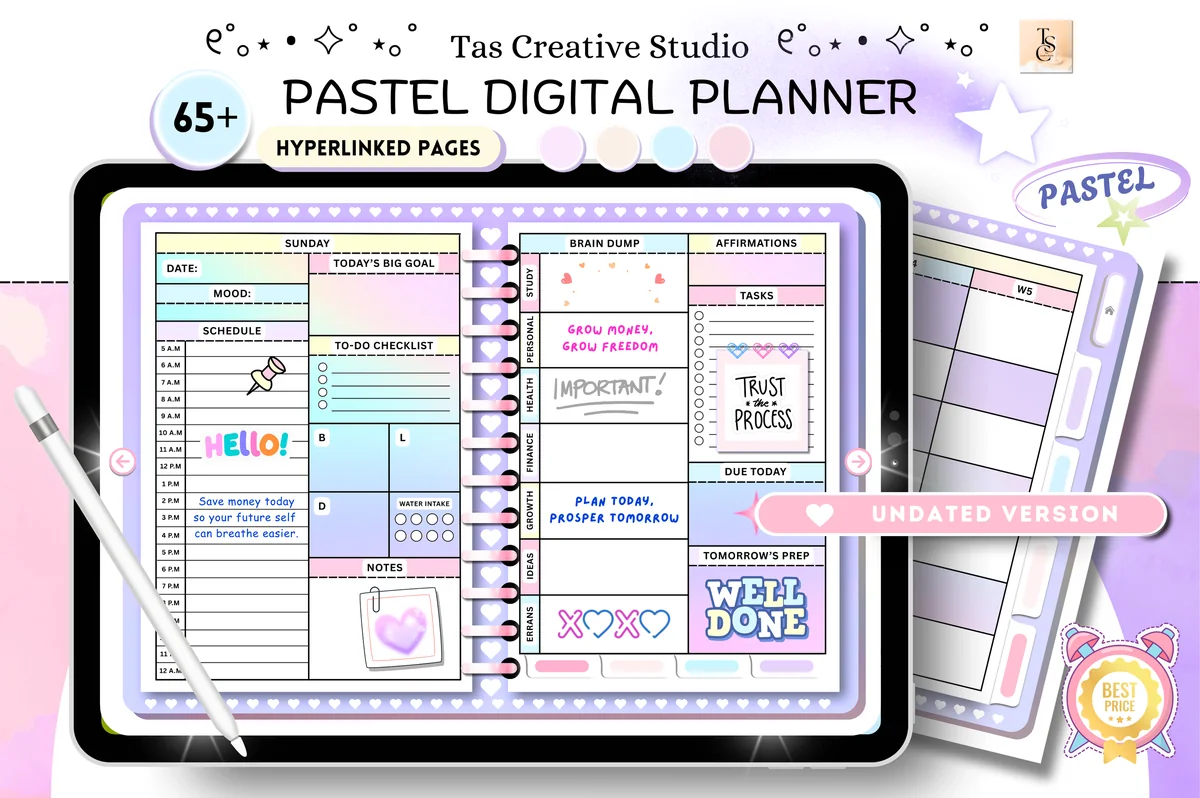
Best for a ready-made challenge page
1. Digital Planner Cute Pastel ( Undated )
Orientation: LandscapeLayouts: Daily, weekly, monthly, habits, self-care, 30-day challengesDates: UndatedWeek start: Sunday
Best for: a pastel checklist with room for a small daily action. Designed by Tas Creative Studio.
- A 68-page undated landscape planner with hyperlinked daily, weekly and monthly pages
- Habit tracker, daily routines and weekly self-care checklist
- 30-Day Fitness Challenge and 30-Day Mental Health Challenge pages; these are tracking pages, not treatment programs
- Works with GoodNotes, Notability and Noteshelf
The pastel checklist and habit tracker serve different jobs: one holds the next daily experiment, while the other records a habit you repeat. That makes this my closest match for a visible challenge page. The 30 ideas below are my own sequence; the included fitness and mental health pages do not contain this program.
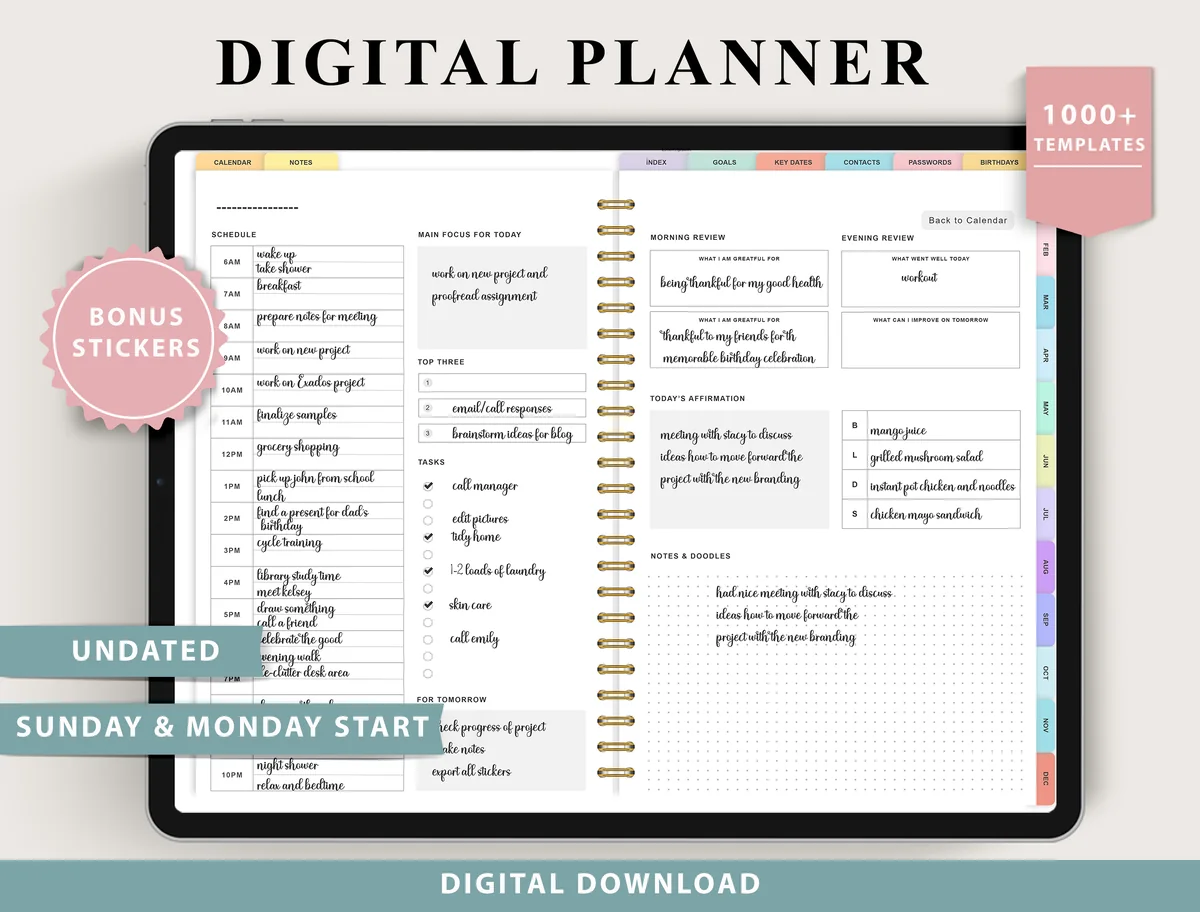
Best for several kinds of tracking
2. Digital Planner for Ipad, GoodNotes
Layouts: Challenge, sleep, habits, routines, outfit planningDates: UndatedWeek start: Monday or Sunday
Best for: separate sleep, routine and challenge notes. Designed by ThePlannersDelight.
- Undated PDF planner for iPad with Monday and Sunday starts
- Challenge tracker, weekly workout log and workout planner
- Monthly sleep, mood and habit trackers, plus routines and outfit planner
- GoodNotes and Notability supported; not designed for OneNote or printing
Separate pages help when a single grid gets crowded. Put the daily action in the challenge tracker and open the sleep or outfit pages only when they serve your plan. This option suits someone who wants those distinct sections; anyone who prefers one simple page may find the broader bundle unnecessary.
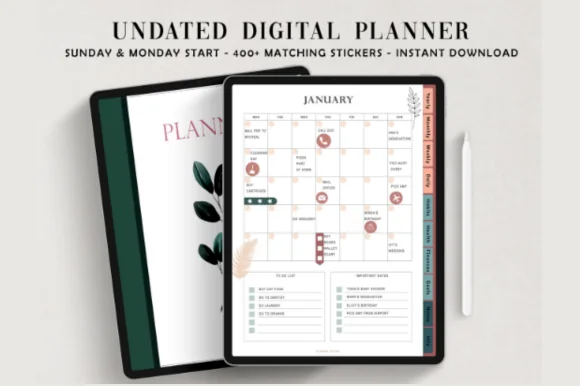
Best for a quieter goals notebook
3. Deep Blue Undated Digital Planner
Orientation: PortraitLayouts: Habits, goals, vision board, notes, daily, weekly, monthlyDates: UndatedWeek start: Monday or Sunday
Best for: a botanical monthly habit page and written reflections. Designed by ThePlannersDelight.
- 112-page undated hyperlinked digital planner for GoodNotes and Noteshelf on iPad
- Monthly habit tracker, habits pages and a workout log
- Goal planner, goals wheel, vision board and six note templates
- Monday-start and Sunday-start PDF files with instruction manuals
I like the deep green botanical design for a quieter planning page. Pair its monthly habit grid with a notes page for daily experiments, and use the goal pages for the end-of-month review. This is a general planner rather than a dedicated glow-up workbook. The included body-progress pages can stay unused.
Quick Comparison
| Planner | Where to track | Useful extra |
|---|---|---|
| 1. Digital Planner Cute Pastel ( Undated ) | 30-day challenge pages | Pastel checklist and daily routines |
| 2. Digital Planner for Ipad, GoodNotes | Challenge and wellness trackers | Outfit planner and routines |
| 3. Deep Blue Undated Digital Planner | Habit grid and goals pages | Botanical notes and vision board |
Before day one: choose a smaller definition of progress
Write one sentence at the top of your page: “At the end of this month, I want my days to feel more ___.” Try prepared, comfortable, rested or intentional. A word like flawless leaves you with no useful next action. A word like prepared can become setting out tomorrow’s bag before bed.
- Choose one daily minimum. For example, write a one-line check-in after you put your iPad on charge. The action should still fit a busy day.
- Give the challenge a budget. Zero is a valid budget. Use the clothes, toiletries and notebook you already have before making a shopping list.
- Set a stopping rule. Skip an action if it causes discomfort, feels unsafe or makes tracking obsessive. You do not owe a grid thirty perfect checkmarks.
- Pick a review time. Put ten minutes on days 7, 14, 21 and 30. The review is a chance to make the plan easier, not grade your appearance.
The day numbers below are a suggested sequence. They are not a streak you have to protect. Move an action to the weekend, repeat something helpful or use a rest day when you need one. Six groups of five actions make thirty days; they are themes, not six separate weeks.
30 daily ideas, in six gentle groups
Days 1–5: skin, grooming and comfortable basics
- 1Audit the routine you already have. List the products and steps you currently use, then mark what feels simple and comfortable. Do not add several new products just because the calendar has started. On your page, write one practical friction point, such as not finding your usual moisturizer, and one way to remove it.
- 2Make a small care station. Put the items you use together in one reachable place. Check labels and local disposal guidance before clearing expired or unwanted products. The useful result is a setup you can find tomorrow, not a bathroom that looks like a photograph. Record what you moved so the new arrangement is easy to maintain.
- 3Check instructions before changing anything. Read the labels on products you already own and note questions you want to ask a qualified professional. This is an organization task, not a prescription for actives, supplements or treatments. If a product irritates your skin, leave it out of the challenge rather than trying to push through.
- 4Prepare one comfortable grooming task. Choose something ordinary that you have been putting off: cleaning a hairbrush, finding your nail file or washing reusable accessories according to their care instructions. Schedule the task at a realistic time. Avoid turning this into a full makeover that requires money, a new appointment or several extra steps.
- 5Write your low-energy version. Create a short note describing what basic care looks like on a difficult day. Keep it personal and manageable, without a checklist copied from someone else. Put the note where you will see it. Your minimum is useful precisely because it is smaller than the routine you might choose on an easy day.
Days 6–10: body comfort and enjoyable movement
- 6Notice where the day feels uncomfortable. Write down one practical issue: a bag that is too heavy, shoes that rub or a desk setup that makes breaks awkward. Choose a simple adjustment within your control. This is about comfort and planning; do not use the note to diagnose pain or decide that you need a new body.
- 7Plan movement you actually enjoy. Choose an activity that already feels appropriate for you, such as a gentle walk or familiar mobility routine, and give it a small place in the week. There is no required duration or intensity here. Adapt or skip it for your circumstances, and ask a clinician about pain, injury or medical restrictions.
- 8Remove one barrier to getting outside. Find the jacket, accessible route or time slot that makes a short outdoor break easier if that is available to you. An indoor alternative is equally valid. Write the practical arrangement in your calendar, including any transport or access needs, rather than setting a step target you did not choose.
- 9Prepare for a busy-day break. Choose a pause that fits between your existing commitments: standing up if comfortable, looking away from your screen or sitting somewhere quieter. Tie it to a moment you already recognize, like finishing a meeting. Note whether the reminder was useful; a page full of alarms can become another source of pressure.
- 10Review comfort rather than appearance. Use one sentence to answer what felt easier this week and one to say what needs changing. Leave measurements and before-and-after pictures out if they are unhelpful. A planner can record your observations, but a completed row is not evidence of a health improvement or a reason to increase exercise.
Days 11–15: sleep and everyday routines
- 11Map the last part of your evening. Write what usually happens between finishing your obligations and getting into bed. Look for one avoidable task that keeps drifting late, such as packing a bag. Move that task earlier if possible. The point is to understand the sequence, not impose a bedtime that conflicts with your work or caring responsibilities.
- 12Prepare tomorrow in one small way. Set out a useful item, write the first appointment or leave a reminder by the door. Choose one action you can finish without creating a long evening ritual. In your planner, write the cue beside it: “After dinner, put my keys in my bag.” A concrete cue is easier to recognize than “be organized.”
- 13Choose a screen boundary to try. Decide on one screen-related change that suits you, such as stopping work messages after your agreed working hours or moving an absorbing app away from your home screen. It is an experiment, not a treatment for sleep problems. Record whether the boundary was realistic before deciding to repeat it.
- 14Make the morning less crowded. Remove one nonessential decision from tomorrow morning. You might select clothes, check transport times or make a short priority note. Keep necessary care and accessibility needs in place. If mornings remain difficult, use the notes to identify constraints instead of assuming that waking earlier would solve everything.
- 15Review your actual schedule. Compare the routine you planned with the commitments you had. Keep the part that fit and shrink the rest. You can note sleep times if useful, but do not treat a PDF tracker as a sleep assessment. Persistent sleep difficulties deserve appropriate professional advice, not a stricter challenge score.
Days 16–20: food planning without food rules
- 16List a few familiar meals. Write meals or snacks that you enjoy and can reasonably prepare or obtain. Include convenient options for busy days. There is no calorie target, food ban or required menu in this challenge. The useful output is a short list you can consult when deciding what to eat feels like one more job.
- 17Check what is already available. Look through your usual food storage and note what can help with an upcoming meal, following food safety guidance and storage labels. Make a small shopping list only if needed. This is a planning exercise, not a pantry makeover or a reason to throw away foods that do not match an aesthetic.
- 18Give one meal a place in the day. Look at tomorrow’s commitments and identify a realistic opportunity to eat. If you need food away from home, plan the practical part: where it will come from and how it will be stored. Adapt the idea to your circumstances and any dietary guidance you already follow.
- 19Make a busy-day option easier. Write a fallback that does not require an ambitious recipe: a familiar ready-made option, leftovers stored safely or a simple meal you already know. Add the relevant item to your list. The fallback is part of the plan, not a failure to complete the more elaborate version.
- 20Remove one unhelpful food metric. Look at your challenge page and delete any rule that turns eating into a score, unless it is a specific part of care directed by your clinician. Keep practical notes like “bring lunch” if they help. Food and exercise changes should fit your needs, not a stranger’s before-and-after routine.
Days 21–25: mindset, attention and connection
- 21Write a three-line check-in. Answer: What is taking up space in my mind? What can wait? What is one kind thing I can do for myself today? You do not need a polished journal entry. Close the page after the three lines if that is enough; the exercise is not a substitute for mental health support.
- 22Edit one source of comparison. Mute an account, clear a saved folder or move away from content that leaves you feeling worse. You can keep useful tutorials while removing messages that make everyday care feel inadequate. Note the specific change rather than promising to stop comparing yourself altogether, which is not a useful checkbox.
- 23Make room for one enjoyable thing. Put a small activity you enjoy on the calendar: reading, drawing, music or a quiet hobby. Choose it for pleasure rather than its value as self-improvement. If your day is full, schedule a shorter version or another date. The planner should help the activity happen, not turn enjoyment into another performance.
- 24Send a low-pressure message. Reach out to someone you want to stay connected with, if that feels safe and welcome. A simple hello or invitation is enough. Do not measure success by how quickly they reply. Write down that you made space for connection, and leave room for other people’s schedules and boundaries.
- 25Name a boundary you can state clearly. Draft one practical sentence, such as “I can help on Saturday, but I am not available tonight.” You can practice it in a notes page before using it. A boundary is a communication choice, not a guarantee that a difficult relationship will change. Seek support when the situation involves safety or coercion.
Days 26–30: style, confidence and keeping what works
- 26Build one outfit from what you own. Choose clothes that suit an ordinary upcoming day and feel comfortable for your body and circumstances. Note the combination or take a private reference picture if you want. This is a way to reduce a decision later, not a test of whether your wardrobe matches a trend.
- 27Fix one wardrobe annoyance. Find the missing button, set aside an item for repair or put uncomfortable shoes out of your everyday rotation. Choose a task you can finish or schedule. If repair costs money, write the amount before committing. A practical change can be useful without buying a whole new set of clothes.
- 28Prepare for one moment of confidence. Think of an upcoming meeting, class or social event and write what would help you arrive prepared. That may be checking the address, rehearsing an introduction or allowing travel time. Choose an action within your control instead of writing a vague instruction to become more confident by tomorrow.
- 29Choose three actions worth keeping. Look back over the month and mark only the actions that helped and fit your schedule. You are selecting a smaller routine, not adding thirty permanent habits. For each choice, write a cue and a minimum version. Leave out anything you did only to fill a square.
- 30Close the month with a usable next page. Write what you want to continue, what you want to stop and what you still need help with. Then schedule the next review. Compare your choices with your opening sentence about how you wanted the days to feel. There is no requirement for a visible transformation or a perfect completion rate.
If you miss a day, leave the square blank or mark it “moved.” Do not double tomorrow’s tasks to repay it. Use the gaps to notice which tasks need a smaller version or a different time.
A seven-day glow up challenge for a crowded week
Use this version when thirty days feels like too much. It reuses the same approach in a smaller sequence; it is not seven days of extra tasks on top of the longer plan. Give each action a realistic place in your calendar and keep the daily minimum small.
Your one-week reset
- 1Day 1: choose your direction. Write how you want your days to feel and select one small action for the week.
- 2Day 2: clear one care barrier. Put your everyday essentials together and leave the rest of the room alone.
- 3Day 3: plan a comfortable break. Choose an appropriate pause or enjoyable movement, with an accessible alternative.
- 4Day 4: prepare tomorrow. Set out one item or make one decision before the morning arrives.
- 5Day 5: plan a familiar meal. Choose a practical option and note anything you need to obtain or prepare.
- 6Day 6: make space for yourself. Pick a short enjoyable activity or write the three-line check-in.
- 7Day 7: keep one thing. Review what helped, drop what did not and put one repeatable action on next week’s page.
Track the plan in GoodNotes without building a second job
Use the challenge page for the daily experiment and a habit tracker for anything you choose to repeat. Those are different jobs: cleaning a brush once does not need thirty checkboxes. Before editing, keep an untouched copy of your planner files so you have a clean starting point later.
A simple page setup
- 1Choose a home page. Import your planner PDF into the compatible annotation app you use, or open an existing notebook. Write the start date and your opening sentence on a notes page. Keep the thirty actions in one place so you do not need to search several sections to find tomorrow’s task.
- 2Schedule the next few actions. Copy only the next week’s actions into your calendar or daily pages. Move tasks around existing work, appointments and caring responsibilities. A PDF does not create reminders or automatically sync these handwritten entries with your calendar; use a separate calendar reminder if you want one.
- 3Use a small status key. Try a tick for done, an arrow for moved and a dash for skipped. Add a few words when a task needs adapting. Do not color every empty square red. The record should help you decide what fits, not turn the challenge into a daily verdict on your motivation.
- 4Review before adding more. At your review, choose what to repeat and what to remove. If keeping several trackers feels burdensome, return to the single notes page. An optional planner is useful only when it makes the next action easier to find; more pages do not mean more progress.
Could this become a 90-day glow up plan?
Yes, as a personal planning horizon rather than a promise about habit formation. Do the thirty-day experiment first. Then repeat a smaller set of actions for the next month and use the last month to adjust them around real life. You do not need ninety unique tasks or ninety days without a break.
- Days 1–30: explore. Try the small actions and write down what was useful.
- Days 31–60: simplify. Keep one to three actions and make their minimum versions clear.
- Days 61–90: adapt. Check whether the routine still fits your work, budget and energy; change it when circumstances change.
A “that girl” planner may use a different aesthetic, but the name alone does not tell you what pages are inside. Check for the actual habit grid, routine page or challenge tracker you want. None of the three planners above is being presented as a dedicated ninety-day program.
FAQ: making the challenge your own
Is one month enough for a glow up?
A month is a useful window for trying a routine and noticing what fits. It is not a deadline for changing your body, skin or mental health. Judge this plan by the practical actions you want to keep, not an expected before-and-after result.
Do I need to buy a glow up planner?
No. A blank page can hold the action, date and a short reflection. The planners above offer ready-made tracking spaces if you prefer them; the thirty actions stay the same whichever notebook you choose.
What if I miss several days?
Resume with the next action that fits your current day. You can move the finish date or finish with fewer actions. Avoid doubling up, restricting food or increasing exercise as a way to catch up.
Is this safe if I have health concerns?
This is an optional organization checklist, not medical or mental health care. Ask a qualified clinician before changing diet or exercise when health conditions, injury, pregnancy, medication or eating concerns affect your choices. Stop any activity that causes symptoms or distress and seek appropriate help.
Can I start at any age or time of year?
You can adapt the organization and reflection ideas to your circumstances without waiting for January or a birthday. There is no age deadline in this plan. Skip actions that do not fit your needs, access or responsibilities.
Keep the next action small enough to use
Your glow up challenge does not need to end with a new identity. Start with one useful action, a place to write it and permission to adapt tomorrow. At the end of the month, keep the parts that make ordinary days easier and leave the rest on the page.
You May Also Like
This article contains affiliate links. If you buy through them, I may earn a commission at no extra cost to you. Read the affiliate disclosure.