You remember the conversation you wanted to bring up just as your appointment ends. A therapy journal on your iPad can be a place to keep that question within reach, without writing an account of your whole week.

I organized these twenty ideas around three moments: before a session, afterward and in the days between. They are personal writing suggestions for an adult client, not a clinician’s case notes or a treatment program. Start with an existing notebook; the eight digital tools below are optional places to keep the pages.
Eight iPad tools for keeping personal notes
Choose by retrieval first. A sectioned notebook keeps questions separate from reflections; a monthly journal files entries by date; page papers can fit an existing notebook. The prompts in this article are my suggested page headings, not a claim that a product contains those exact forms.
TL;DR: Start with one dated note and one question you want to discuss. The twenty ideas below organize personal writing before, after and between appointments. Choose a sectioned notebook, a monthly journal or page papers according to how you want to retrieve those notes.
Quick Picks
- Best for sorting notes by purpose: Digital Notebook
- Best for a compact five-part system: Cute Hyperlinked Notebook – 5 Tab
- Best for combining a sketch with words: Watercolor Hyperlinked Digital Notebook
- Best for a dated paragraph: DaisyNotes | Digital Notebook | Purple
- Best for small notes beside a week: Undated Cute Orange Bullet Journal
- Best for collecting thoughts before choosing a topic: Digital GoodNotes Journal – Art Deco
- Digital Notebook – Best for sorting notes by purpose
- Cute Hyperlinked Notebook – 5 Tab – Best for a compact five-part system
- Watercolor Hyperlinked Digital Notebook – Best for combining a sketch with words
- DaisyNotes | Digital Notebook | Purple – Best for a dated paragraph
- Undated Cute Orange Bullet Journal – Best for small notes beside a week
- Digital GoodNotes Journal – Art Deco – Best for collecting thoughts before choosing a topic
- Digital GoodNotes Journal – Tie Dye – Best for filing notes by month
- Digital Notebook Papers – GoodNotes – Best for adding one page to an existing notebook
Sectioned notebooks for different kinds of notes

Best for sorting notes by purpose
1. Digital Notebook
Orientation: LandscapeLayouts: 16 note templates
Best for: keeping questions, session reflections and everyday observations in separate sections. Designed by Shades of Zen.
- 12 expandable sections with hyperlinked tabs and individual dividers
- 16 note templates, including lined, dotted, graph and Cornell notes
- Landscape notebook shown on iPad; GoodNotes and PDF annotation apps named
The section index is the draw here. Start with just three section labels: Before, After and Between. A Cornell page could hold a short account on the right and the question you want to ask on the left. The notebook gives that idea room without requiring a detailed daily log.
Best for a compact five-part system
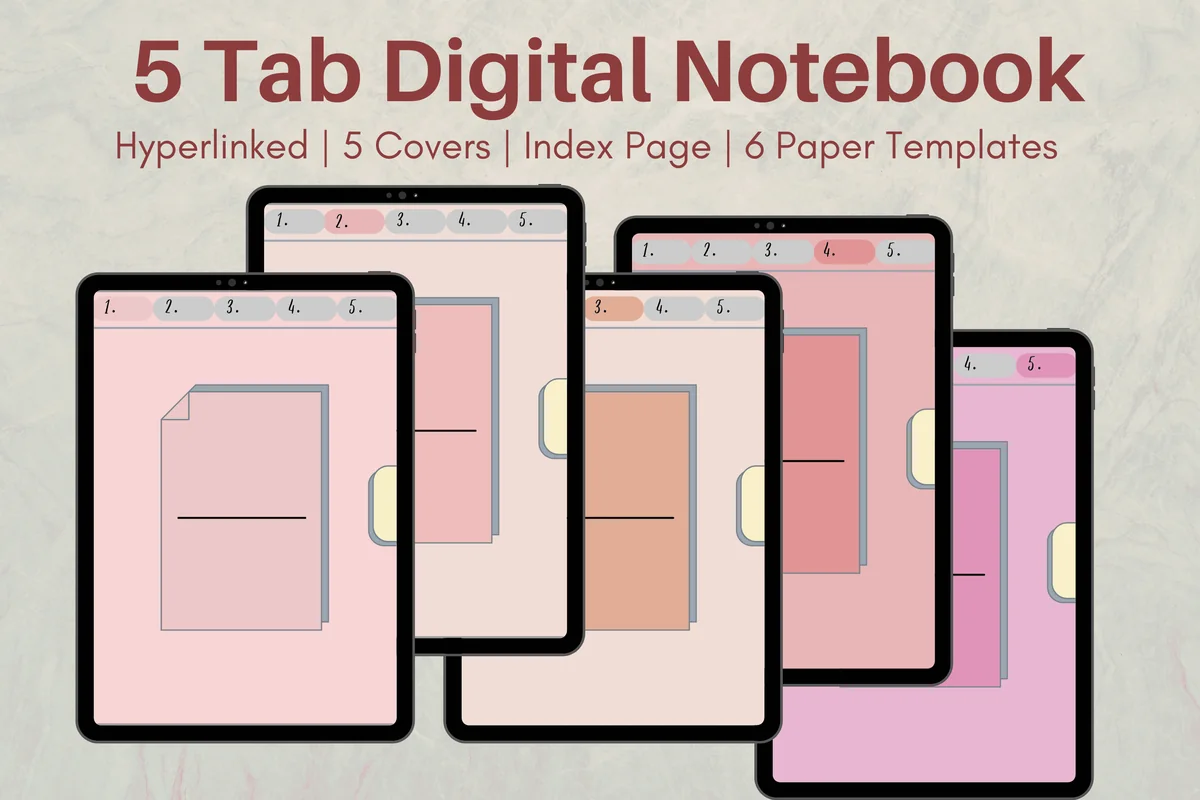
2. Cute Hyperlinked Notebook – 5 Tab
Layouts: Six paper templatesFormat: PDF
Best for: separating a small set of personal writing categories. Designed by Melissam Illustration.
- One PDF with five subject dividers and a writable index
- Six paper templates and five covers
- GoodNotes, Notability, Noteshelf and Xodo listed; iPad use specified
Five tabs are enough for a restrained system: appointments, observations, questions, agreed practice and reference. The blank, ruled and grid options shown make it possible to keep a drawing beside a short note. I like this one when twelve sections would invite more organizing than writing.

Best for combining a sketch with words
3. Watercolor Hyperlinked Digital Notebook
Layouts: Lined, blank, half-linedFormat: PDF in a zip archive
Best for: putting a small drawing above a short personal reflection. Designed by daysfilledwithjoy.
- One PDF for GoodNotes or another PDF annotation app
- 12 hyperlinked sections
- Lined, blank and half-lined pages; pages can be duplicated
The half-lined page is a useful middle ground when a full page of prose feels like too much. Put a small sketch in the empty area, then add a caption and one question below. Choose it for that page structure and watercolor styling, rather than expecting a guided clinical exercise.
Chronological and compact journals
Best for a dated paragraph
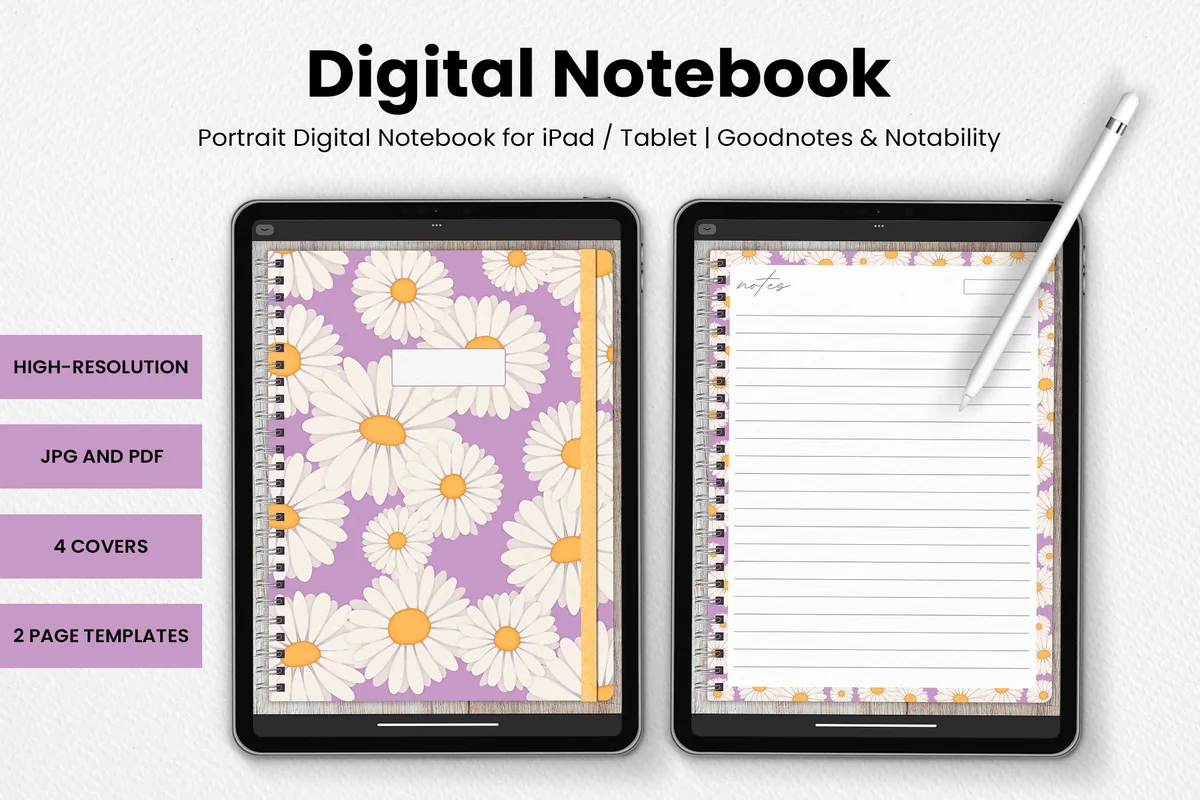
4. DaisyNotes | Digital Notebook | Purple
Orientation: PortraitFormat: JPG and PDF
Best for: writing a chronological account without building a large category system. Designed by catsquills.
- Portrait notebook for GoodNotes and Notability
- Four covers and two page templates
- JPG and PDF; wood-texture background and daisy borders
A date and a paragraph can be enough. The lined page keeps the focus on a few sentences, while the floral border gives the file a recognizable identity in your library. If finding a particular appointment becomes difficult, add your own short page-number index at the front.
Best for small notes beside a week
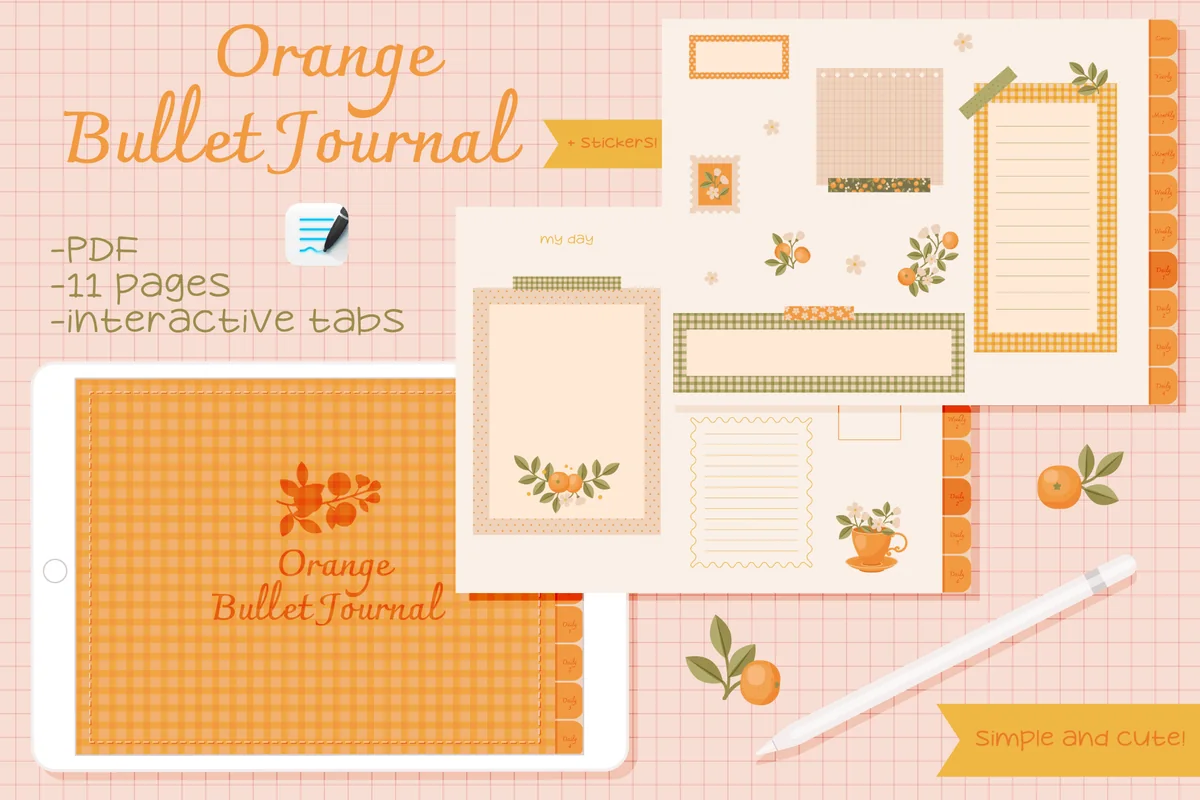
5. Undated Cute Orange Bullet Journal
Layouts: 11 pages advertisedFormat: PDF; .goodnotes stickersDates: Undated
Best for: capturing one moment in a compact weekly writing space. Designed by digitaliya_studio.
- Interactive digital bullet journal PDF for GoodNotes
- 11 pages advertised on the first preview
- Undated weekly and monthly spaces; stickers in .goodnotes format
The orange weekly layout suits a sentence on a day when something comes up, rather than a long account every evening. Circle one note to bring to your appointment. The decorative boxes are small, so a roomier lined notebook is the better choice if you regularly need several paragraphs.
Best for collecting thoughts before choosing a topic
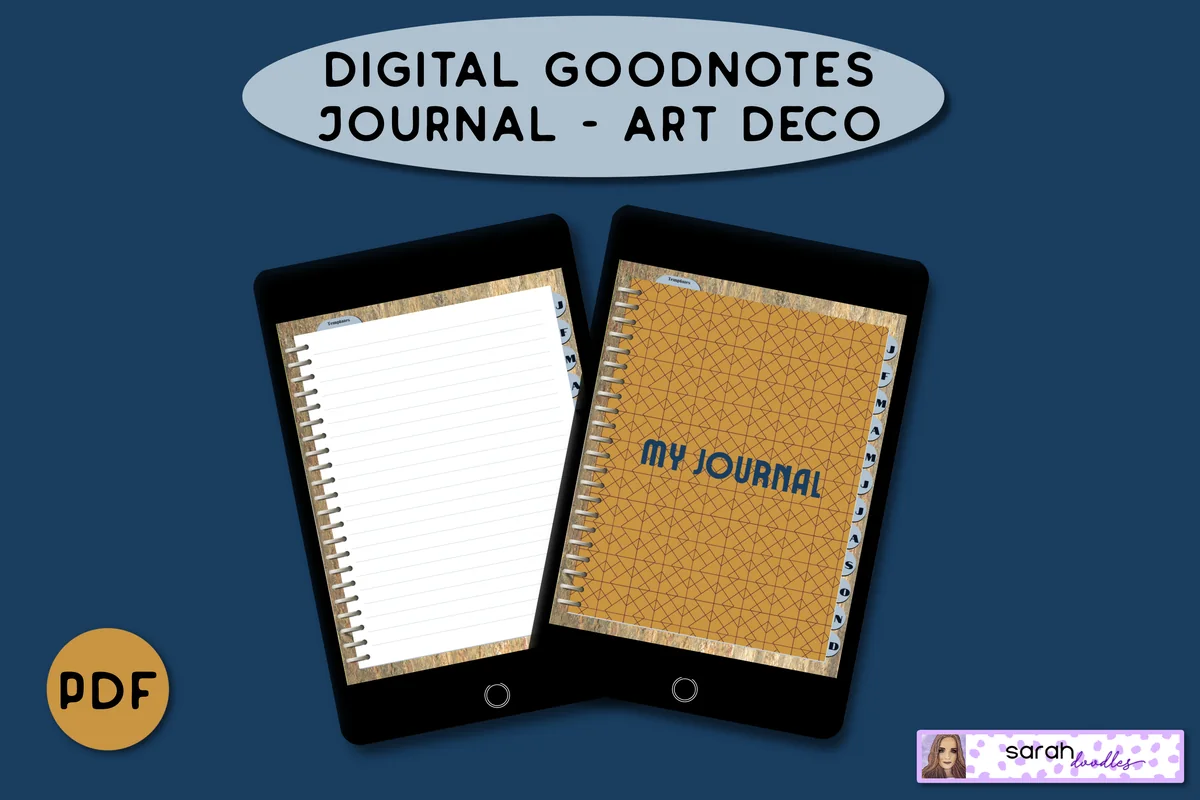
6. Digital GoodNotes Journal – Art Deco
Format: Hyperlinked PDFDates: Undated
Best for: moving from an open writing page to a short appointment agenda. Designed by Sarah Doodles.
- Undated hyperlinked PDF with monthly dividers
- Five lined pages per month; more can be added in GoodNotes
- Brain dump and priority templates shown
- Seller recommends iPad or tablet with Apple Pencil or stylus; personal use only
The Art Deco listing explicitly includes a brain dump template. Use the open list for things you do not want to forget, then choose a single item for your next conversation. The printed priority headings are optional organizing labels, not a judgment about which feelings deserve attention. For clickable tabs, the seller directs users to the reading tool in supported apps.
Best for filing notes by month
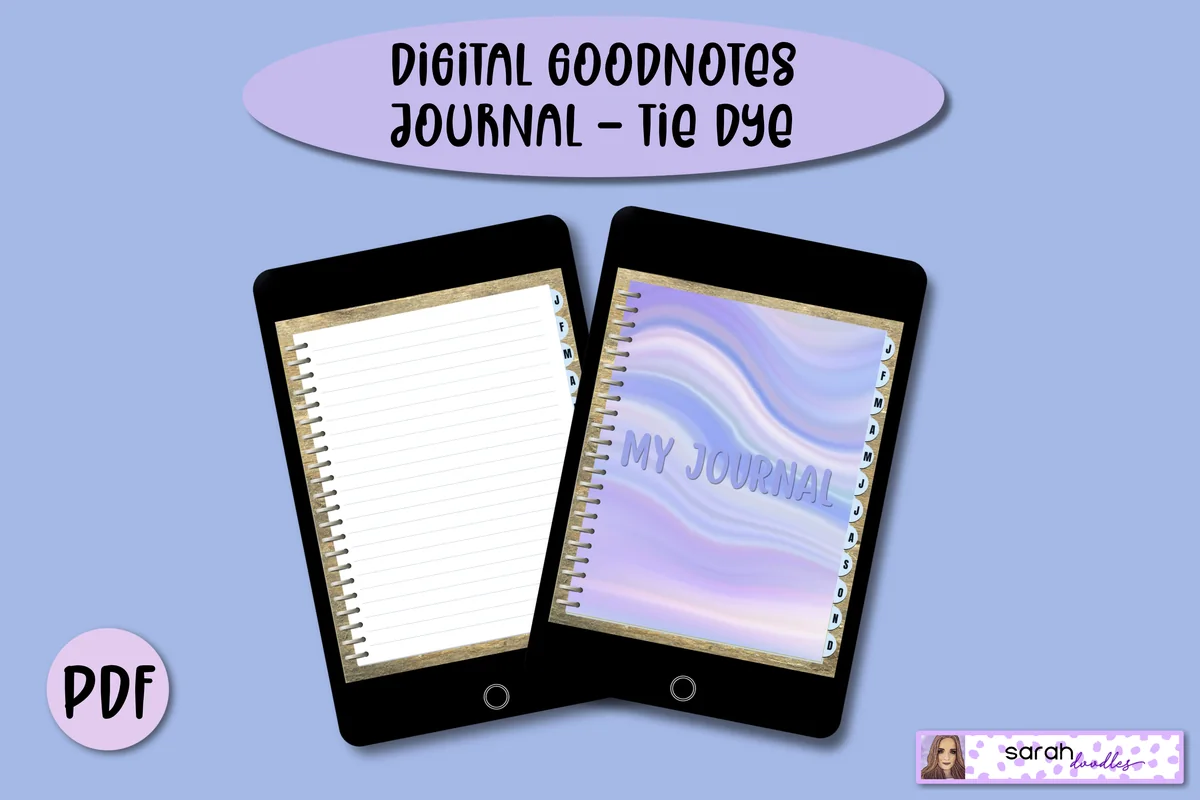
7. Digital GoodNotes Journal – Tie Dye
Format: Hyperlinked PDFDates: Undated
Best for: keeping dated entries together under monthly dividers. Designed by Sarah Doodles.
- Undated hyperlinked PDF for GoodNotes, Notability, Xodo and Noteshelf
- Five lined pages per month, with page duplication described for GoodNotes
- Different monthly covering pages shown
- Seller recommends iPad or tablet with Apple Pencil or stylus; personal use only
Tie Dye makes sense if you want a month-based shelf for notes and prefer its lavender cover design. Date each entry yourself so a monthly tab does not become the only clue to when something happened. Its lined writing pages are the main attraction. The seller notes that clickable links may require the reading tool in GoodNotes or Notability.
Page papers for a notebook you already keep
Best for adding one page to an existing notebook
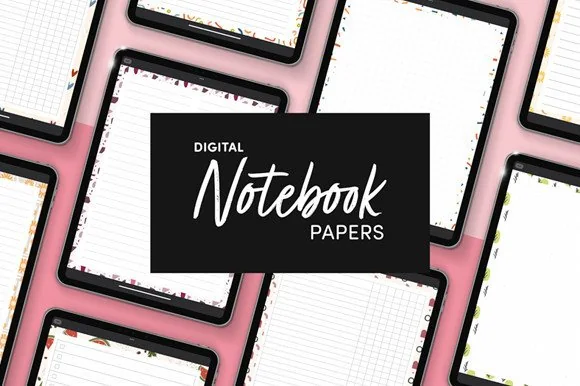
8. Digital Notebook Papers – GoodNotes
Orientation: PortraitFormat: PNG and PDF
Best for: trying the writing layout without replacing your current system. Designed by catsquills.
- Nine portrait paper designs for GoodNotes and Notability
- Eight layouts per design, including columns, numbered list, lines and notes
- PNG and PDF files; US Letter dimensions in the description
These are page papers, so this is the option for a notebook you already have. A columns layout could separate the event from your question; the numbered list can hold an agenda. Start with one ruled design and add other layouts as a need comes up. Buy for the reusable writing surface, not for a promised therapy-specific workbook.
Quick Comparison
| Tool | Choose for | Writing space | Structure |
|---|---|---|---|
| 1. Digital Notebook | Purpose-based sections | 16 templates | 12 linked sections |
| 2. Cute Hyperlinked Notebook – 5 Tab | Five categories | Six paper templates | Five linked tabs |
| 3. Watercolor Hyperlinked Digital Notebook | Sketch plus caption | Three page types | 12 linked sections |
| 4. DaisyNotes | Digital Notebook | Purple | Chronological notes | Two page templates | Portrait notebook |
| 5. Undated Cute Orange Bullet Journal | Brief weekly notes | Weekly spaces and boxes | Undated bullet journal |
| 6. Digital GoodNotes Journal – Art Deco | Collect then choose | Lined and brain dump pages | Monthly linked journal |
| 7. Digital GoodNotes Journal – Tie Dye | Monthly filing | Lined pages | Monthly linked journal |
| 8. Digital Notebook Papers – GoodNotes | An existing notebook | Eight layouts per design | Page papers |
How to start journaling for therapy without a long daily entry
Give your first page one job: help you find a subject you want to discuss. A short entry can contain a date, a concrete moment and a question. You can add detail later if you want it; you do not need to complete a week of journal entries before bringing a question to a session.
Set up one repeatable page
- 1Create a private place for the file. Choose where you will open and store it. Before putting sensitive details on a shared iPad, check who can access the device, the annotation app and any synced account. A decorative cover or a PDF format does not establish privacy.
- 2Write three headings. Use “What happened,” “What I noticed” and “What I want to ask.” Leave most of the page empty. These are ordinary writing headings, so you can type them or add them by hand over a lined or blank page.
- 3Give the entry a stopping point. Try one brief entry as a starting format, then close the file when it has captured the point. This is a page-design suggestion, not a prescribed writing duration. Ask your therapist about timing if journaling is part of your treatment.
The setup steps above are separate from the twenty writing ideas below. Keep the page easy to open at the next appointment: a neutral title, a visible date and one clearly marked question are more useful than a complicated color key.
20 therapy journal prompts for before, after and between sessions
Pick the idea that matches the moment you are in. There is no need to work through the list in order or turn it into a challenge. The examples are invented writing examples, not descriptions of a person’s treatment or evidence of a health outcome.
Before a session: choose what you want to bring
- 1The one thing I do not want to forget. Put one subject above the rest of your notes. Be specific enough that you will recognize it later: “I said yes to another weekend shift” is easier to return to than “work stress.” Leave room underneath for what makes that moment worth discussing.
- 2A question left over from last time. Write the question in your own words, even if you are unsure whether you understood the conversation correctly. “When you said boundaries, what might that look like here?” gives you a place to begin without trying to reconstruct every sentence from memory.
- 3What feels different today. Use two short lines: “Last appointment” and “Today.” Describe a change you have noticed, or write that things feel much the same. This page records your perspective at two moments; it is not a score of treatment success or a test you must pass.
- 4The moment I keep coming back to. Describe one scene with a beginning and an end. Include what happened and what you want to understand about your response. You can leave out names and private details that are unnecessary for recognizing the situation. A single scene is enough for this page.
- 5How I would like to start talking. Draft a first sentence you could read aloud: “There is something I want to discuss, but I am finding it hard to explain.” You do not have to finish the whole story in writing. The entry can simply hold the opening words you want available.
After a session: keep the part you want to remember
- 6One idea in my own words. Choose a point from the conversation and summarize what you understood. Mark it as your summary, especially when you are unsure. Add “Check this next time” beside anything you want clarified rather than presenting your memory as a quotation from your therapist.
- 7What I want to ask about next. Give an unfinished thought its own line. For example: “We talked about asking for help; I want to explain why that feels awkward at work.” Keep the question near the top of the next page so it is easy to find without rereading everything.
- 8A phrase I want to keep. Write a sentence that felt meaningful to you and note whether it is your wording or a remembered phrase. It could be a reminder to ask a question, rather than a motivational quote. Leave space to add what the phrase means in a specific everyday situation.
- 9An agreed next step. If you and your therapist agreed on something to try, record it as you understand it. Include any question about the instructions. If there was no agreed practice, leave this page unused; a journal template does not create an assignment by having an empty box.
- 10What I am leaving open. List an issue you did not finish discussing. Add a note about whether you want to return to it at the next appointment or simply keep a record. You are making a reminder for yourself, not deciding that every unfinished subject needs an immediate written answer.
Between sessions: capture one ordinary moment
- 11A brief event, feeling and question. Divide a note into three small fields. For example: “Meeting ran late / frustrated / what made it hard to say I needed to leave?” This is a personal observation, not a clinical thought record or an instruction to challenge the feeling on your own.
- 12Something I wanted to say. Write the words you did not manage to use in a conversation. Underneath, add what you would like help discussing. The page can remain private; it can stay separate from any message to the person involved, and writing it does not commit you to sending anything.
- 13A choice I want to understand. Describe the choice without grading it as good or bad. Add what you knew at the time and what still feels unclear. A concrete example such as postponing a phone call gives your next conversation more context than a broad label about your character.
- 14An exception worth mentioning. Record a moment that differed from what you expected. “I thought asking would be awkward, but the reply was straightforward” is specific enough to discuss. An exception does not cancel a difficult experience elsewhere; keep it as another piece of your account.
- 15A small drawing with a caption. Sketch a shape, a room or a simple scene if that is easier than starting with sentences. Add a date and a caption explaining what you want to remember. You do not need to interpret the image or turn its colors into a diagnostic key.
Before returning: make the notes easier to use
- 16Three notes, one discussion topic. Look at a few recent entries and choose one subject for the appointment. Copy only the date and a short cue onto a fresh page. This keeps the working agenda small while allowing the longer entries to remain available if you decide you want them.
- 17A question about the journaling itself. Write what has been easy, awkward or unhelpful about keeping notes. For example: “I keep trying to make the entry sound sensible before I write it.” The writing process can be something you ask about, rather than another task you quietly struggle to complete.
- 18A privacy and sharing choice. Mark an entry “For me,” “Summarize” or “May want to show.” These are your organizational labels, not app security controls. They give you a reminder of your preference before opening the file in a session. Check the actual page before handing over a device.
- 19One thing I appreciate, with context. If gratitude journaling appeals to you, name a specific thing and why it mattered that day. “A friend checked in after the appointment” has more context than “friends.” Skip this prompt when it does not fit; your journal does not have to end every entry positively.
- 20The next opening line. Finish the review with a sentence you could use at the next meeting: “I have one example I would like to talk through.” Put the relevant date beside it. This brings the page back to its practical purpose: helping you locate what you want to say.
These journaling prompts give each page a narrow focus. When journaling for therapy, keep the question you want to discuss easy to find. Therapy journaling can stay as simple as that personal reminder, rather than becoming a second appointment’s worth of writing.
A structured page can hold feelings and emotions without asking you to explain everything. Use the space to notice a detail, reflect on an ordinary moment or record a question about future appointments. If a writing habit is helpful, keep the same headings; there is no need to measure progress with a longer entry.
A simple therapy journal template with a filled example
Here is a deliberately ordinary example. It records a situation and a question without assigning a diagnosis, interpreting somebody else’s intentions or choosing a treatment. You can use the same shape in a notes app, on paper or over a PDF page.
- Date and moment: Tuesday, after the team meeting.
- What happened: I agreed to a task even though my week was already full.
- What I noticed: I felt frustrated later and kept rehearsing what I could have said.
- Question for the appointment: Can we talk about why I find it hard to pause before answering?
- What I might share: This short summary rather than the rest of my private writing.
The question is the useful end point. You do not need to settle it in the entry or use a second page to prove your reaction was reasonable. If the topic needs more context, add a few factual details you want to remember for the conversation.
Use a mental health therapy journal to choose what to discuss
Try two journaling techniques with the same everyday event: describe what happened, then add a short reflection on what you want to understand. Reflective journaling involves writing about your response, so distinguish what you observed from what you guessed about others. For example, write “My friend did not reply, and I started to worry” rather than treating the silence as proof of how they feel.
For an entry about anxiety, try “What was I expecting, what happened, and what question remains?” For relationships, try “What did I want to say, and what would I like help putting into words?” To include strengths without forcing a positive ending, ask “What did I manage in this situation, even while it felt difficult?”
To try these therapy journal ideas, give yourself two minutes as an optional starting point, then stop when you have a note you can use. Compared with recounting the whole week, one dated example keeps the next discussion focused on a particular moment. If you want to gain insights from regular writing, revisit an earlier question and note what you would ask differently today; you do not need to score your emotional health or judge your progress against other people.
Adapt therapy journal prompts for teens to everyday situations
The twenty ideas above address adults, but a teen can start with a school or friendship example instead of the workplace example. Try “What happened at school that I want help explaining?” or “When did I feel heard, and what did the other person do?” Another prompt asks “What do I wish an adult understood about my day?”
Keep these as optional conversation starters and ask the treating professional about any assigned therapeutic journaling. A young person can also bring a question about who may read the notes and how sharing will work. These personal pages support a conversation; they do not provide professional therapy or instructions for processing difficult emotions alone.
PDF notebook, guided journal or journaling app?
Choose the surface that fits your writing practice. A guided journal supplies prompts; a blank notebook gives you space to write your own. A PDF template and the app used to annotate it are separate things, so check both before buying.
- Choose a sectioned notebook when you want separate places for questions and reflections. Digital Notebook has twelve linked sections; Cute Hyperlinked Notebook has five.
- Choose a monthly journal when dates are your main way of finding entries. The Sarah Doodles journals organize writing under monthly dividers.
- Choose page papers when you already have a notebook and only want a different writing surface. Digital Notebook Papers provides columns, lines and other layouts.
- Consider an app’s own features separately if you need reminders, search or syncing. Do not infer those features from a PDF product’s name or cover. Review the app’s current information and privacy settings.
For more open-ended page themes, see my digital journaling ideas. If you prefer a small daily color mark with room for context, the mood tracker ideas offer a different page format. Neither needs to replace the appointment question page.
Keep the writing manageable and decide what to share
Private journal writing does not need polished sentences. Mind explains that you can keep what you write private; Mental Health America suggests lists and other formats as alternatives to paragraphs. Those are useful permissions when an empty page feels demanding.
- Use fragments: a date, a few words and a question can be your entire entry. Grammar and spelling do not need to become a second task.
- Return to today: after a gap, open a new dated page. My suggested setup does not require catching up on missed entries.
- Separate drafting from sharing: make a short summary if you want to discuss a point without opening the whole notebook.
- Review access: consider shared devices, synced copies, exports and notification previews before adding sensitive details. Check the settings of the device and app you actually use.
Frequently asked questions
What do you write in a therapy journal?
For this personal-notes approach, write a moment you want to remember, what you noticed and one question you might discuss. You can also record your understanding of an agreed next step. Ask your therapist how they would like you to approach any writing assigned as part of treatment.
What is the best therapy journal notebook for iPad?
Choose by how you look for notes. Digital Notebook suits separate topic sections; DaisyNotes suits a dated paragraph on a lined page; the Art Deco journal adds a brain dump layout. The best fit is the page you can find and use, rather than the largest set of templates.
Can I make a therapy journal PDF from a blank notebook?
You can add your own date, headings and questions over a blank or lined PDF in a compatible annotation app. Start with the three fields in the filled example above. These are personal page headings, not a substitute for a workbook or instructions your clinician has recommended.
Should I use a therapy journal app or keep notes online?
A notebook file is enough for the page ideas here. If you prefer an online service, review who can access your entries and how the service stores, syncs and uses them. A product being sold as a PDF tells you its file type; it does not answer those questions about the app or account.
How often should I write if I find journaling hard?
There is no schedule attached to these ideas. Begin with a note when there is something you want to bring to an appointment, and ask your therapist about frequency if writing has been assigned. You can use short phrases instead of a daily journal entry with a fixed length.
Do I have to show my therapist everything I write?
You can choose what to share from your private writing, as Mind explains. A summary, a question or a single page can be a starting point. If a specific journaling task forms part of your care, discuss expectations with your therapist so you understand how that task will be used.
Can journaling replace treatment, and when should I ask for help?
Journaling is not a replacement for treatment, as Mental Health America notes. The University of Wisconsin’s journaling guidance advises stopping when writing brings up feelings you cannot cope with and seeking professional advice for lingering negative feelings. Do not use these page ideas to work through traumatic memories on your own. For immediate danger, seek urgent local help rather than waiting to write an entry.
Bring one clear question to your next appointment
Your therapy journal can begin with a single page: one moment, one observation and one question. Pick the idea that fits today, keep the entry as short as you need and choose a digital tool only if its page structure makes those notes easier to use. There is no need to complete every prompt before having the conversation.
You May Also Like
Purchases made using product links on this page can support iPad Planner Hub through a referral commission without changing what you pay. Read the affiliate disclosure.