It is finally quiet, your iPad is open, and the list of things you could do for yourself somehow feels like more work. A self care routine can start with a smaller question: what kind of rest do you actually want today? These ideas help you choose by need, time, cost and your own preferences, then record one action in a digital planner or journal.
These twenty self care routine ideas form five menus to choose from. Pick the menu that matches the moment. The eight planners and journals below are optional places to keep your choices, with different strengths for scheduling, checklists and reflection.
Choose the page that fits your kind of planning
For a ready-made self-care page, begin with the pink self-care planner or the pastel weekly checklist. Prefer to write your way toward a decision? The smaller journals provide a different starting point. I selected these tools from their descriptions and preview pages; the ideas that follow are activities you choose yourself, not promises of twenty included templates.
TL;DR: Choose one activity by need, available time, cost and your personal no-list. The eight tools below offer different starting points: self-care planning, a weekly checklist, monthly intentions or reflective writing. A template is optional; the choice comes first.
Quick Picks
- Best for a rest menu beside your schedule: Digital Planner, Self Care, Goodnotes
- Best for a weekly checklist: Digital Planner Cute Pastel ( Undated )
- Best for a monthly intention: The Ultimate Selfcare Planner | Planner
- Best for keeping wellness with everyday plans: Essential Digital Planner, Goodnotes
- Best for intentions and affirmations: Law of Attraction Self Care Digital Planner
- Best for sorting out what you need: Positive Mind Journal/Digital Journal
- Digital Planner, Self Care, Goodnotes – Best for a rest menu beside your schedule
- Digital Planner Cute Pastel ( Undated ) – Best for a weekly checklist
- The Ultimate Selfcare Planner | Planner – Best for a monthly intention
- Essential Digital Planner, Goodnotes – Best for keeping wellness with everyday plans
- Law of Attraction Self Care Digital Planner – Best for intentions and affirmations
- Positive Mind Journal/Digital Journal – Best for sorting out what you need
- Self Care Journal, Digital Journal, PDF – Best for a short prompted entry
- Digital Wellness Journal – Best for an evening record
Planners for choosing and scheduling rest
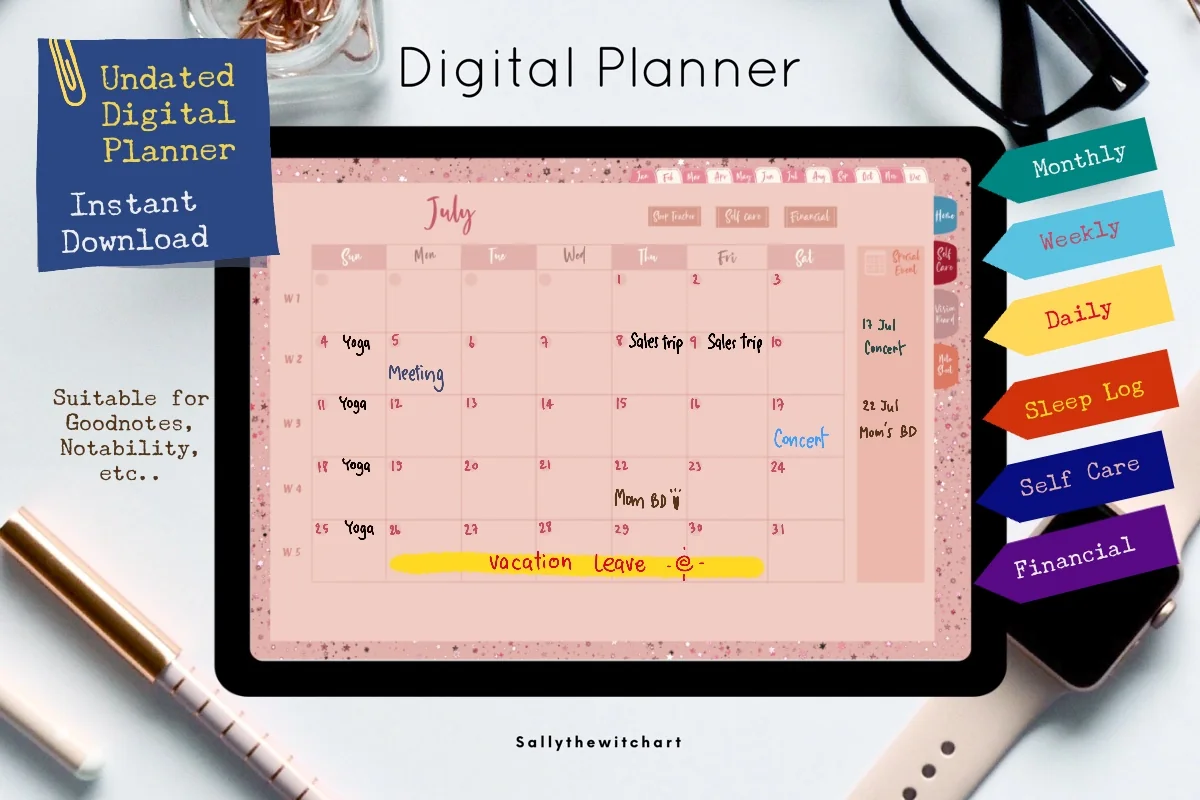
Best for a rest menu beside your schedule
1. Digital Planner, Self Care, Goodnotes
Layouts: Monthly, weekly, daily; self-care and notesDates: UndatedWeek start: Sunday
Best for: self-care planners, pink lovers, sleep trackers. Designed by Sallythewitchart.
- Undated monthly, weekly and daily planning pages
- Yearly and monthly self-care planners plus a monthly sleep tracker
- One PDF file; GoodNotes, Notability, Xodo and Noteshelf listed
- Sunday-start version and ten note pages
I like the connection between the self-care page and the calendar. Write a small menu in the note pages, then put only the activity you choose into today's plan. The yearly view is useful for keeping larger wishes visible without turning every wish into a daily obligation.
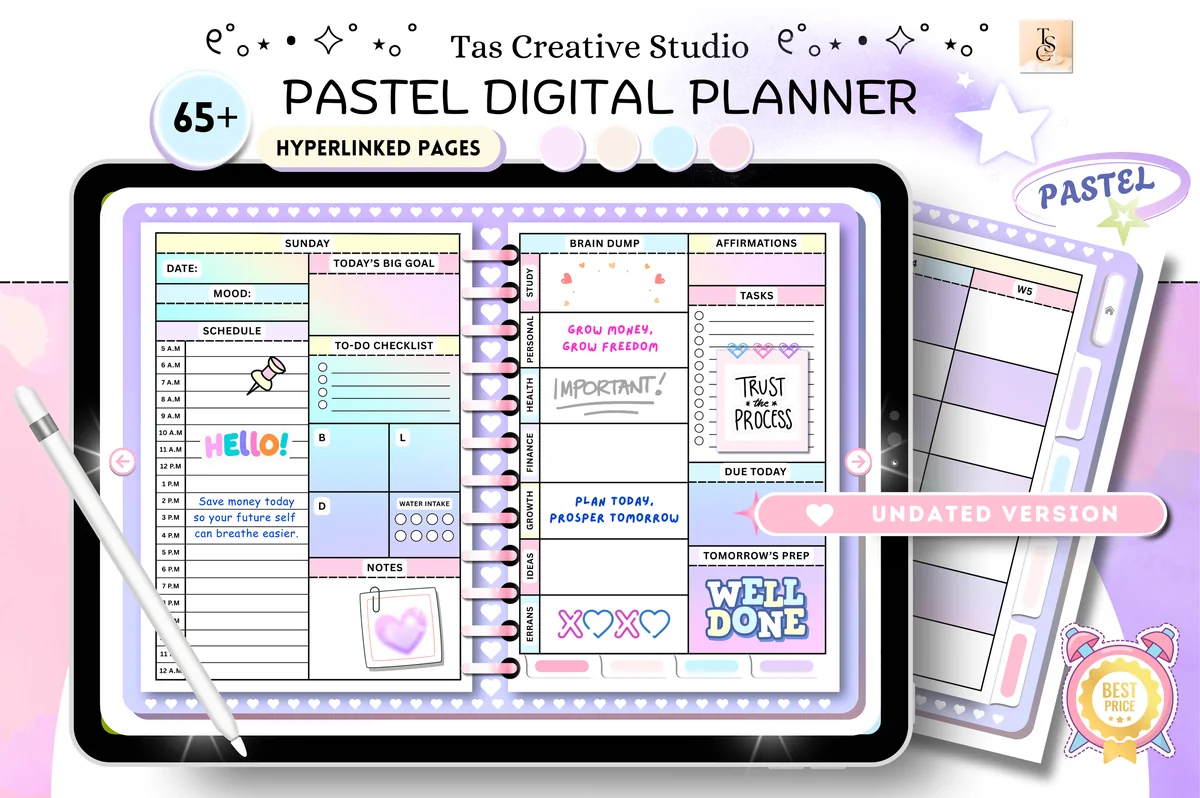
Best for a weekly checklist
2. Digital Planner Cute Pastel ( Undated )
Orientation: Landscape, 11 × 8.3 inchesLayouts: 68 pages; daily, weekly, monthly and trackersDates: UndatedWeek start: Sunday shown
Best for: pastel lovers, wellness planners, challenge fans. Designed by Tas Creative Studio.
- 68-page horizontal planner with daily, weekly and monthly navigation
- Weekly self-care checklist, self-care checklist and daily routines
- Habit tracker, reading log and meal tracker
- GoodNotes, Notability, Noteshelf and Xodo listed
The weekly checklist offers a ready-made place to record your choice. Use it selectively: a page full of empty boxes is not a debt you owe yourself. The fitness and mental-health challenge pages are planning prompts, not treatment programs.
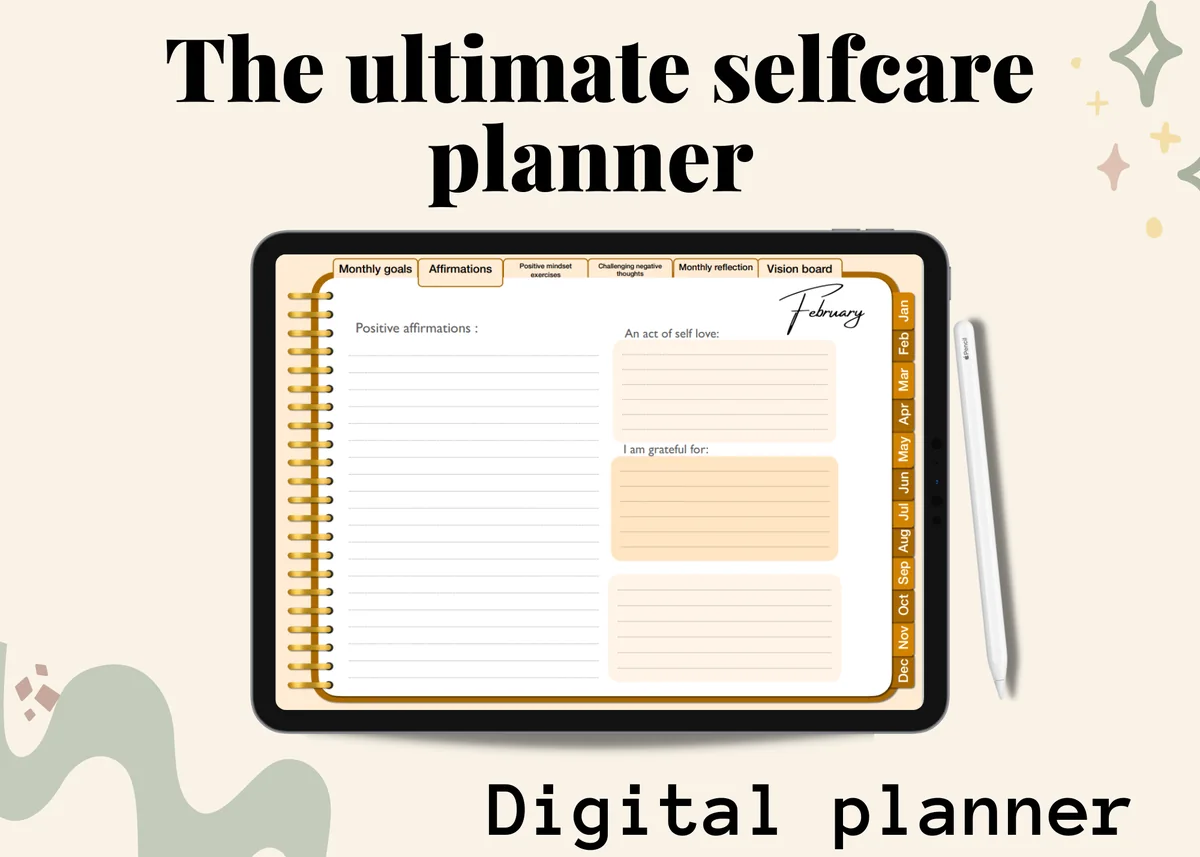
Best for a monthly intention
3. The Ultimate Selfcare Planner | Planner
Layouts: Monthly calendars, goals, affirmations and reflectionDates: UndatedWeek start: Monday
Best for: self-care planners, positive mindset fans. Designed by yarasdigitalshop.
- 12 undated monthly calendars, Monday start
- Monthly goals, affirmations and reflection
- Positive mindset exercises, challenging-negative-thoughts pages and a vision board
- 18 hyperlinks per page; GoodNotes and Notability listed
Choose this for the monthly question: what do I want to make room for? Its goals and reflection pages provide a different rhythm from checking off an activity each evening. Treat the thought exercises as optional personal writing; they do not replace professional support.
Best for keeping wellness with everyday plans
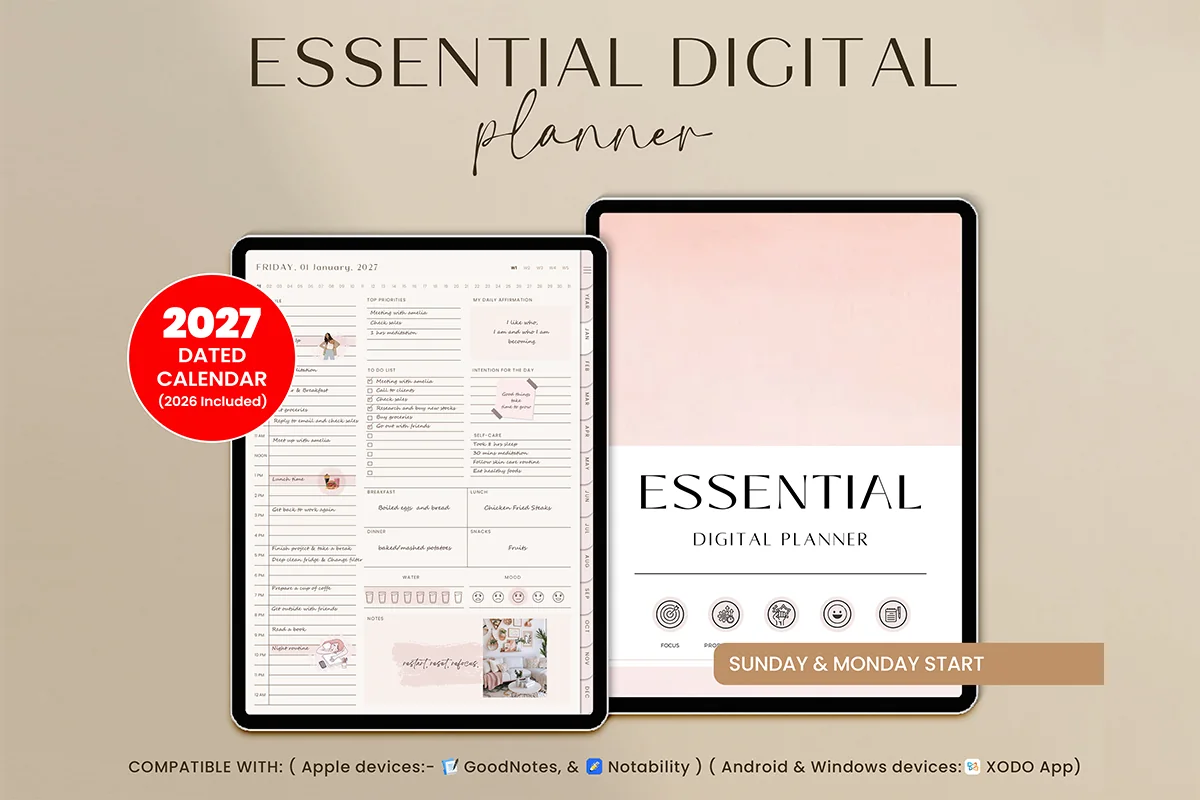
4. Essential Digital Planner, Goodnotes
Orientation: PortraitLayouts: 563 pages; planning, wellness and custom notesDates: 2027 calendar; 2026 also includedWeek start: Monday and Sunday
Best for: connecting self-care goals to a wider calendar. Designed by TrendyCreative.
- 563-page portrait planner with daily, weekly and monthly pages
- Self-care goals, sleep and mood trackers
- Five custom note sections and six note-paper templates
- Monday and Sunday starts; GoodNotes and Notability shown on Apple devices
This is the larger organizational option. Keep your personal need/time/cost menu in one notes section and use the self-care goals page for the activity you intend to repeat. The previews show a dated calendar for 2027 with 2026 included, so check the file year rather than assuming this is an undated notebook.
Best for intentions and affirmations
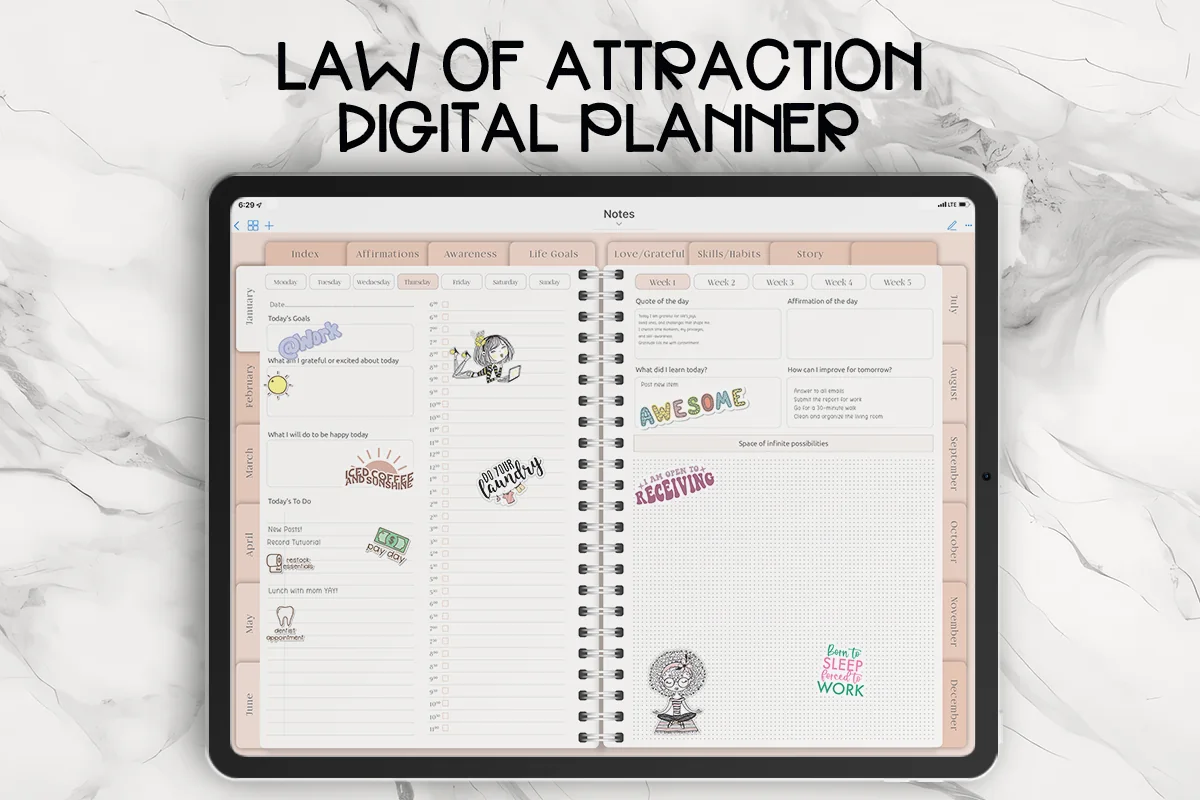
5. Law of Attraction Self Care Digital Planner
Layouts: Daily, weekly, monthly; 38 journaling sectionsFormat: Interactive PDFDates: Undated
Best for: manifestation fans, self-care planners, goal setters. Designed by PlannerNook.
- Undated hyperlinked monthly, weekly and daily pages
- Monthly reflections, affirmations, awareness questions and life goals
- Index with 38 journaling sections
- Interactive PDF for iPad with GoodNotes, Notability and other PDF annotation apps
The intention-led approach may appeal if you enjoy affirmations before planning the day. Connect an intention such as making room for friendship to one concrete invitation. The seller uses manifestation language; I am selecting the writing and planning structure, not promising that thoughts produce particular outcomes.
Journals for noticing what you need

Best for sorting out what you need
6. Positive Mind Journal/Digital Journal
Layouts: 20 pages; reflection, mind map and notesPaper: US LetterFormat: PDF shown in previews
Best for: beginners, pink lovers, evening journalers. Designed by Nann Digital Art.
- 20-page digital journal with hyperlinked index and tabs
- Daily Mindfulness, Evening Reflection, Spilled Mind and Mind Map
- Notes, quotes and extra sticker pages
- US Letter size; GoodNotes, Notability, Noteshelf and Xodo for iPad listed
The Spilled Mind and Mind Map pages are a useful starting point when every suggestion sounds wrong. Put the competing needs on paper first, then circle one you can address today. This is a writing-led choice; use your regular calendar separately when an activity needs a scheduled time.
Best for a short prompted entry
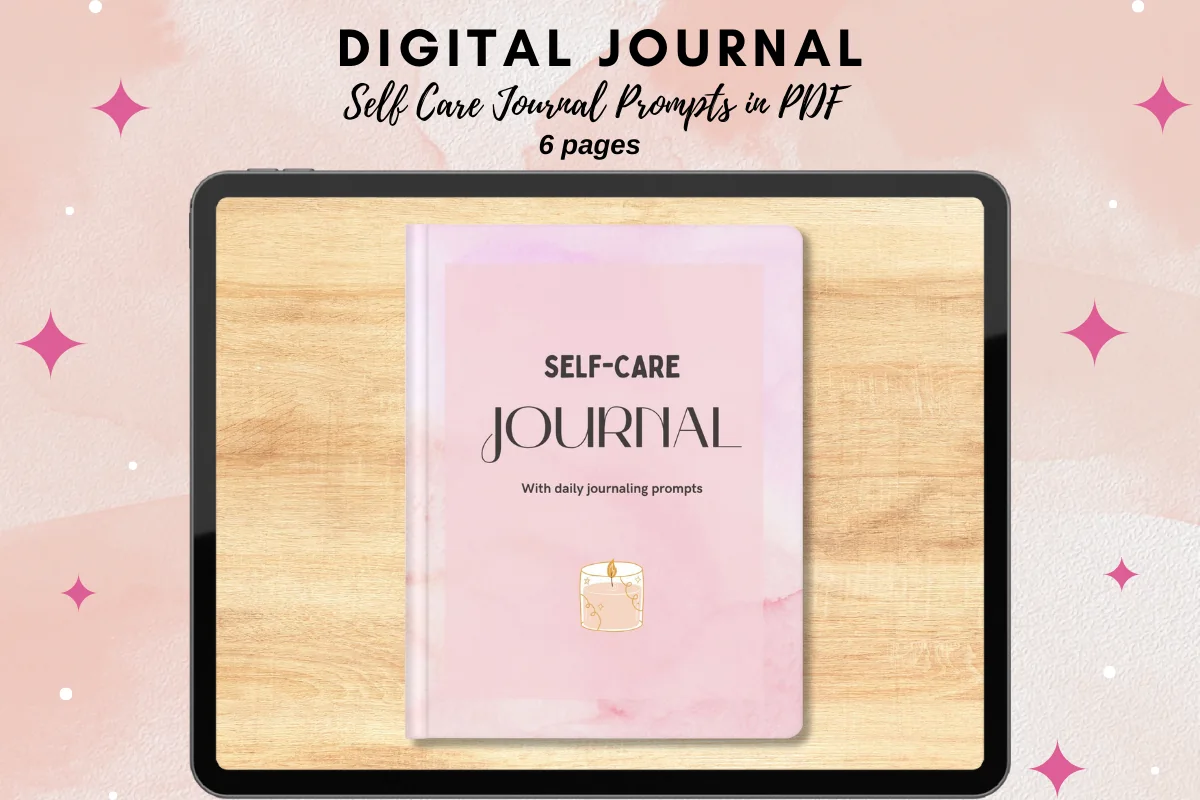
7. Self Care Journal, Digital Journal, PDF
Layouts: 6 journal pages plus coverFormat: PDF; fixed page design
Best for: beginners, self-care fans, pink lovers. Designed by bellaROSEworkshop.
- Six journal pages, excluding the cover
- PDF journal prompts for digital use in apps such as Notability
- Fixed page design; the seller describes the file as not editable
- Seller specifies personal use only
A small prompt pack makes sense when a large planner feels like another project. Answer the question that helps you choose your next action and leave the rest for another day. Keep the original layout intact and observe the seller's personal-use restriction; this is not a template to redistribute.

Best for an evening record
8. Digital Wellness Journal
Layouts: 365 daily pages; 16 templatesDates: Undated
Best for: minimalists, daily check-in fans, wellness planners. Designed by ThePlannersDelight.
- 365 undated hyperlinked daily wellness pages; 384 total pages listed
- 16 templates, five bonus covers and 100+ pre-cropped botanical stickers
- PDF journal, PDF covers in a ZIP and PNG sticker files
- Designed for GoodNotes or Notability on iPad
The daily page brings wellness goals, a self-care ritual and reflection together. Record what you chose and how it felt without treating a run of entries as a medical finding. The seller specifies a tablet you can write on with a stylus such as Apple Pencil; the app, tablet and stylus are not included.
Quick Comparison
| Tool | Choose for | Useful pages | Format |
|---|---|---|---|
| 1. Digital Planner, Self Care, Goodnotes | Scheduling rest | Self-care and sleep pages | Undated PDF |
| 2. Digital Planner Cute Pastel ( Undated ) | Weekly choices | Self-care checklists and routines | Undated digital planner |
| 3. The Ultimate Selfcare Planner | Planner | Monthly direction | Goals and reflection | Undated digital planner |
| 4. Essential Digital Planner, Goodnotes | Wider life planning | Self-care goals, sleep and mood | Dated digital planner |
| 5. Law of Attraction Self Care Digital Planner | Intentions into actions | Affirmations and reflection | Undated PDF |
| 6. Positive Mind Journal/Digital Journal | Naming a need | Mindfulness, mind map and notes | Hyperlinked digital journal |
| 7. Self Care Journal, Digital Journal, PDF | Brief prompted writing | Six journal sheets | PDF; personal use |
| 8. Digital Wellness Journal | Daily observations | Wellness pages and reflection | Undated PDF |
Self care routine meaning: begin with a personal need
Self-care means making room for practices that support taking care of yourself on a regular basis. It can include physical, emotional, social and practical needs; a beauty self-care routine is just one possible part. Mental Health First Aid recommends choosing goals, strategies and a personal no-list. I use those planning ideas here without treating a journal as healthcare.
Start with the sentence “Today I need more ___.” Quiet, company, comfort, a change of surroundings and a little space are useful answers. “I should become a completely different person” is too large to turn into one helpful evening choice.
- Need: name what you want more of, without diagnosing yourself.
- Time: count setup and travel as well as the activity itself.
- Cost: choose a spending ceiling before browsing products or booking anything.
- No-list: rule out activities you dislike, cannot access or do not want today.
- One action: choose a specific next step and a place for it in your day.
A worked example: “I want company, have twenty minutes, want to spend nothing, and do not want a group event.” The next action might be asking a friend about a short phone call. “Book an expensive class” would fail this particular filter even if it appears on someone else’s list of great self-care activities.
A self-care routine list: 20 activities for adults
The times below are suggested planning slots, not clinical doses or promises of benefits. Adjust for your body, responsibilities, access and preferences. You can practice self-care without enjoying meditation, buying a face mask or creating a perfect morning schedule. Self-care routines can look different. Choose a routine that actually fits your preferences rather than copying a skincare routine when you want company.
When you want quiet
- 1A page with no solution required. Set aside five minutes to write what is taking up space in your mind. Use short phrases rather than a polished entry, then mark whether you want rest, support or help with a practical task. Close the journal when the timer ends; you do not have to solve the page.
- 2One familiar song, with nothing else open. Choose a song you already enjoy and put the phone face down while it plays. In your iPad notes, write only the title and whether you would choose it again. This is a small listening break, not another playlist research project.
- 3A quiet seat at home. Choose a comfortable place and give yourself ten minutes without an errand attached. You might watch the view, sit with a drink or simply pause. Put “quiet seat, after lunch” in the planner so that an ordinary break has an actual place.
- 4A reading bookmark. Pick a book, poem or magazine you want to read, not one you feel obliged to finish. Mark a stopping point before you start, perhaps one chapter or ten minutes. Keep the next title in your rest menu instead of opening a shopping tab.
When your body wants ordinary care
- 5A comfortable movement choice. Write two movements you enjoy or do not mind, such as a short walk or a gentle stretch within your abilities. Choose one for today and decide where to stop. Skip intensity targets here; the point of this menu is choosing an activity, not meeting a training plan.
- 6A drink within reach. Put your usual drink where you will remember it during a work or study break. The National School of Healthcare Science handbook includes a visible cup or bottle as a reminder. Follow any personal fluid advice from your clinician rather than copying a universal target.
- 7A familiar food with less decision-making. Choose a simple meal or snack you already know suits you and note what you need for it. Planning the next meal can be the action; cooking does not need to become a performance. Avoid turning this page into a diet score or a set of rules about earning food.
- 8A familiar face-care pause. If you like a skincare routine, make room for your existing care rather than buying a new set of products. Note the time you want for it and leave treatment choices to appropriate professional advice. If face care feels like a chore today, choose another kind of comfort.
When you want connection
- 9An invitation with a clear size. Send a friend a specific, low-pressure invitation: a short call, a walk or tea at home. Include a possible time so the idea can become a plan. An unanswered message is not a failed self-care practice; keep another option on your menu.
- 10A shared ordinary task. Ask someone you enjoy whether they would like to cook, garden or sort a small project together. Choose companionship rather than the most impressive result. Record any agreed arrangement, then put the planner away while you spend time with them.
- 11A personal thank-you. Write a few lines to someone whose help you appreciated, using a detail that belongs to your relationship. Send it only if you want to. A private note of appreciation can remain in your journal; the exercise does not require sharing personal feelings online.
- 12A request for practical support. Name one task you would like help with and who you could reasonably ask. Make the request concrete, such as sharing school pickup or talking through a difficult email. Leave room for their answer and another plan; support is a conversation, not a box that other people must tick.
When your space or boundaries need attention
- 13One comfortable corner. Choose the chair, bedside surface or patch of desk you want to use for rest. Move only what prevents you from using it comfortably. Stop after that small area; a self care routine at home does not have to turn into cleaning the whole house.
- 14A work-message closing line. Choose when you intend to stop checking non-urgent work messages, within your actual responsibilities. Put a short closing reminder in your calendar and note any genuine exception. Your no-list might say “no work email during dinner,” rather than a vague promise to have better boundaries.
- 15A no-spend pleasure menu. Write three things you already have access to: a library book, a familiar route, music or craft materials at home. Circle one you want today. If shopping is the activity you enjoy, set the spending limit first and include the travel time in the decision.
- 16A tomorrow note. Write the first task or question you want to remember tomorrow, then choose where the note belongs. This follows the handbook’s suggestion to record next-day notes as part of winding down. Keep it to the reminder you need; you do not have to plan every hour before you can rest.
When you want an evening or weekend ritual
- 17A phone-free stretch of time. Choose a short period when you want the phone out of reach and decide what you will do instead. A book, music or a conversation can give the break a shape. Keep access available if you need to be reachable; this is a personal boundary, not a test of willpower.
- 18A hobby with the setup included. Give drawing, knitting, puzzles or another enjoyable activity a realistic slot, including getting things out and putting them away. Leave the supplies easy to reach next time. In the journal, record whether the setup was worth it rather than judging the quality of what you made.
- 19An unhurried home comfort. Choose a familiar shower, a comfortable change of clothes or another ordinary comfort you enjoy. Decide whether you want silence or company nearby, and remove one avoidable interruption. A long bath or spa purchase is optional, not the definition of a routine.
- 20A small outing you would actually choose. Consider a nature walk, a library visit or sitting in a nearby outdoor space if those options suit you. Check access, weather, transport and total cost before committing. Put the practical details in your planner, then keep a home option for a day when going out does not appeal.
Notice how the menus include physical self-care, emotional self-care, social time and ordinary boundaries. You can keep several categories on the page without scheduling an activity from every category each day. Preferences and habits change; a useful menu leaves room for different ways to relax or skip an option.
Choose self-care activities for adults around the need
Work, caring for others and household tasks can compete for the same free hour. Before adding self-care strategies, ask which need you often postpone: a meal, company, relaxation or time away from messages. Give that individual need a place on the page rather than trying to improve every part of your overall wellness at once.
Plan a self-care routine for mental health around a check-in
Use the quiet-writing idea to name what is occupying your attention, then choose whether you want solitude, company or practical help. For example, write “I feel overwhelmed by tomorrow’s errands” and arrange help with one task instead of adding another activity. Later, note whether the choice left you feeling more grounded; that observation gives your next plan a starting point without treating the journal as a measure of mental well-being.
Keep a self care routine for face care within its own slot
For the face-care pause above, record when you will follow your familiar skincare steps and how much time you want to leave before bed. You can keep a beauty self-care routine beside your rest menu without making it the whole plan. An eye mask or a new product does not need to become a shopping task; giving yourself time for care you already use can be the entire choice.
A common planning mistake is keeping an activity because it sounds healthy even when you dread its place in your day. Do not force yourself to keep a leisure choice you do not enjoy; try another option from the same menu and record why it fits better. For the long term, the key question is whether the plan still meets the need you wrote down, rather than how many boxes you complete.
Make a self care routine worksheet on your iPad
Use a notes page you already have, or choose one of the journals above if you prefer a designed starting point. This self care routine template is a set of fields to write yourself, not a claim that a particular product contains this worksheet. Keep it to one readable page before adding decoration.
From a menu to one chosen action
- 1Name today’s need. Write one plain sentence, such as “I want quiet after work.” Add the available time and your spending ceiling beside it. This makes choosing easier than reading a large list while trying to remember all your constraints.
- 2Filter with your no-list. Cross out activities that sound draining, cost too much or require access you do not have. A no-list can include no late-night email or no crowded venues. It is permission to choose differently, not a list of moral rules.
- 3Choose and place one action. Give the activity a start cue, a rough duration and any setup it needs. “Read after I put the dinner plate away” links the choice to an existing activity. Put it in a calendar only when that helps you protect the time.
- 4Leave one line for later. Afterward, note “repeat,” “change” or “skip,” plus the reason if you want. Tomorrow’s choice can use that observation. You are learning your preferences, not creating evidence that you performed self-care correctly.
Daily, weekly or monthly: choose the right rhythm
- Daily: one ordinary activity or brief check-in, attached to a moment you already recognize. Keep a morning or night choice only if that timing fits your life. Your self care routine checklist can contain just that one choice.
- Weekly: look ahead for an outing, shared time or an activity with more setup. Include travel, childcare or other arrangements instead of pretending the activity takes only the time spent doing it.
- Monthly: revisit costs, access and your no-list. Remove ideas you repeatedly avoid and add something you are curious about. A monthly reflection can change the menu without turning the whole month into a challenge.
For a detailed comparison of ready-made pages, see my self-care planner selection. If the real problem is organizing a repeatable morning or evening sequence, the daily routine planner guide covers that separate task. This page is about deciding which kind of rest you want to choose.
Template or app: what should do the remembering?
A planner file provides pages for your choices; the note-taking app is where you open and annotate it. A PDF planner does not by itself synchronize your entries with a calendar or send reminders. If a timed reminder matters, add it separately in the calendar or reminder tool you already use.
- Use a planner when the activity needs a time slot beside existing commitments.
- Use a journal when you want to understand a preference or record an impression.
- Use a small checklist when you have already chosen the action and only want a visible cue.
- Keep private entries somewhere you control, and check who can access shared devices or accounts.
FAQ: choosing a routine that feels like yours
What are five examples of self-care?
A reading break, a comfortable walk, time with a friend, a familiar meal and a boundary around work messages are five possible examples. They cover different needs, so the best choice depends on what you want today. The twenty ideas above are a menu to adapt, not a required daily list.
Do I need a different self care routine for women or men?
Start with personal needs and responsibilities rather than a gendered checklist. Quiet, friendship, accessible movement and practical support can matter to anyone. Choose language and activities you feel comfortable with; skincare and beauty routines are optional parts of self-care, not requirements for women or exclusions for men.
How do I build a daily self care routine that actually lasts?
Start with one activity you want to repeat and an existing cue, such as closing the work laptop. Give it a realistic amount of time and review whether you still want it. If it repeatedly feels burdensome, change the activity, timing or setup instead of adding a bigger checklist.
Does self-care have to be expensive or take a long time?
No purchase is needed to make a personal menu on a page you already own. Choose a cost ceiling and include free options before considering paid activities or another planner. There is no single required duration; the suggested slots here are examples for planning, not a formula for results.
Are the 5 C’s or the 5-3-1 rule necessary?
Named rules appear in wellness advice, but you do not need to adopt a numbered framework to use this worksheet. This article does not treat those labels as medical standards. A need, a realistic time slot, a cost limit and one chosen action are enough to start a personal plan.
Can a self care routine for mental health replace professional care?
No. A journal is a place for personal planning and observations, not a diagnosis or treatment. If distress, sleep difficulties or low mood persist, worsen or interfere with daily life, seek advice from a qualified healthcare professional. Follow your existing care plan; a checklist should not change medication or other treatment.
Leave room for the kind of rest you want
Choose one activity you would welcome, make the practical arrangements and leave the rest of the menu for another day. Your self care routine can change with your time, energy and circumstances. Start with a page you already use, then choose a dedicated planner or journal only when its structure makes the decision easier.
You May Also Like
This article includes affiliate links. If you purchase through them, I may earn a commission at no extra cost to you. See the affiliate disclosure.