The sample smelled lovely when you tried it, but a week later all you remember is “something soft.” These perfume journal ideas give that impression a place to land: what you noticed at first, what you noticed later, and whether you want to wear it again.
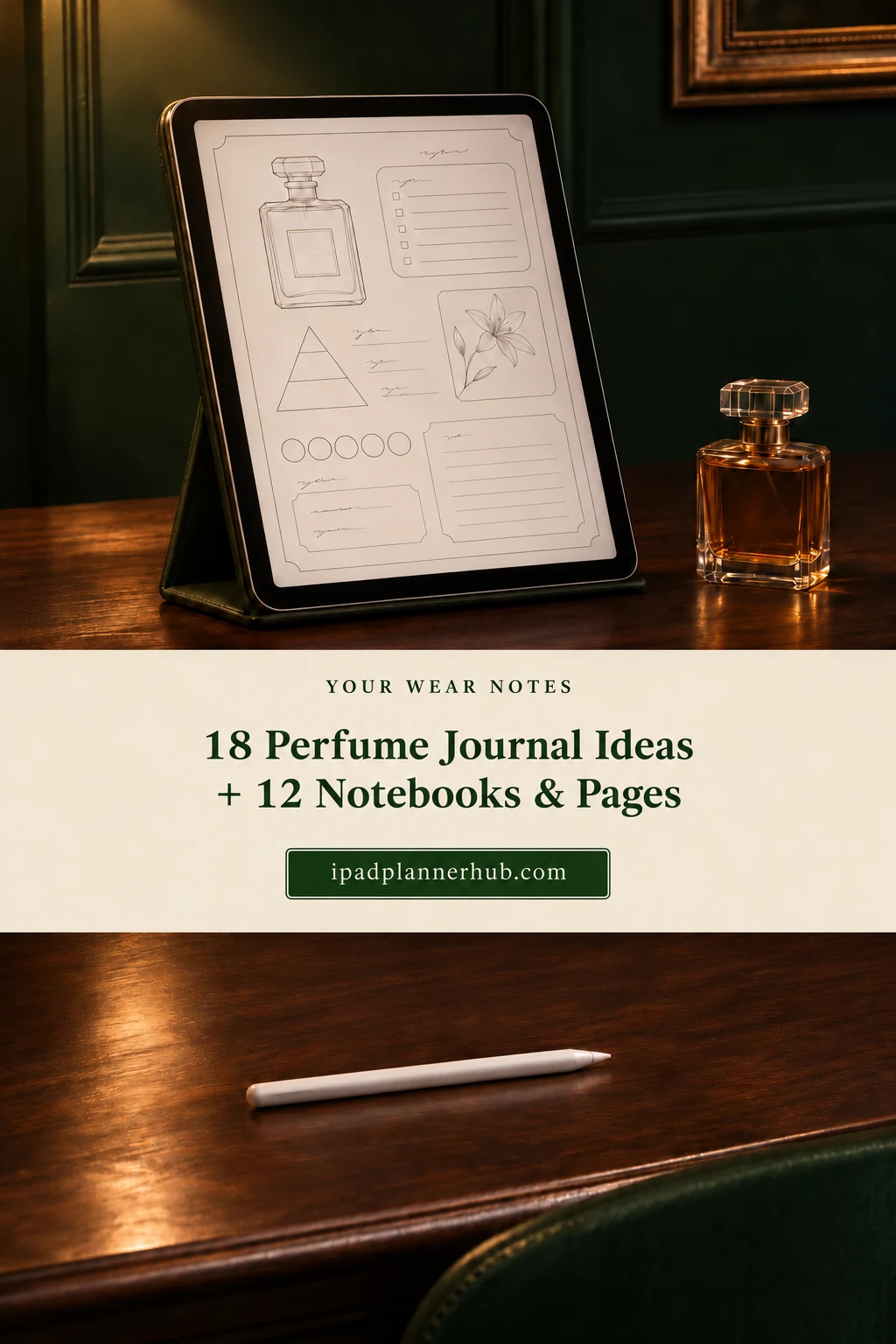
A scent journal keeps your personal fragrance observations in one place. Build your fragrance journal around repeat wear, with a small index to find earlier entries. The twelve listings below describe general-purpose iPad journals, notebooks and paper sets. Use the eighteen ideas that follow to create a wear page and record what you want to remember.
Choose a notebook for the way you record a wear
Start with how you want to return to an entry. A sectioned notebook keeps comparisons together, daily navigation finds a particular date, and loose papers let you add a repeatable wear sheet to an existing notebook. These are files for handwriting in a compatible annotation app, not fragrance-tracking apps. App access and a suitable stylus are separate from the templates.
TL;DR: Use a sectioned notebook for repeat-wear comparisons, a daily or monthly journal for chronological notes, or a paper set to build your own wear sheet. All twelve options are general journals or pages; you add the fragrance fields.
Quick Picks
- Best for side-by-side trials: Digital Notebook
- Best for photo and caption notes: Watercolor Hyperlinked Digital Notebook
- Best for a small working journal: Digital Notebook 5 Hyperlinked Tabs
- Best for varied page experiments: Digital Notebook 5 Hyperlinked Tab
- Best for a large note archive: Digital Notebook 500 Pages Bundle – 2
- Best for a daily wear diary: 365 Days Daily- Digital Journal
- Digital Notebook – Best for side-by-side trials
- Watercolor Hyperlinked Digital Notebook – Best for photo and caption notes
- Digital Notebook 5 Hyperlinked Tabs – Best for a small working journal
- Digital Notebook 5 Hyperlinked Tab – Best for varied page experiments
- Digital Notebook 500 Pages Bundle – 2 – Best for a large note archive
- 365 Days Daily- Digital Journal – Best for a daily wear diary
- Digital GoodNotes Journal – Tie Dye – Best for monthly wear notes
- Digital GoodNotes Journal – Art Deco – Best for loose impressions first
- Digital Ruled Journal – Best for longer handwritten reviews
- Digital Notebook Papers – GoodNotes – Best for building a custom wear sheet
- Undated Cute Orange Bullet Journal – Best for short visual reminders
- DaisyNotes | Digital Notebook | Purple – Best for simple floral note pages
Sectioned notebooks for repeat-wear comparisons

Best for side-by-side trials
1. Digital Notebook
Layouts: 12 linked sections; 16 note templates
Best for: comparing two wear records. Designed by Shades of Zen.
- Landscape notebook with purple section dividers
- Lined, dotted, graph, two-column and Cornell pages
- PDF for GoodNotes and other PDF annotation apps
The two-column pages give each of two wear entries its own space. Put an earlier entry on the left and a later entry on the right, then keep the date and application context at the top of both. Twelve sections give you room to separate a trial queue from completed observations. The landscape spread is a different writing experience from a full portrait page, so choose it for comparisons rather than maximum vertical writing room.
Best for photo and caption notes
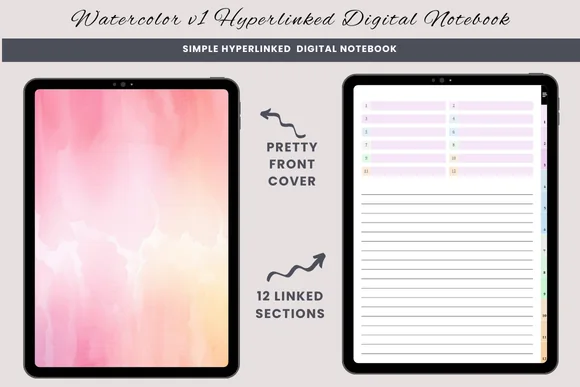
2. Watercolor Hyperlinked Digital Notebook
Layouts: 12 linked sections; 3 page styles
Best for: pairing a reference photo with handwriting. Designed by daysfilledwithjoy.
- Lined, blank and half-lined pages
- Watercolor cover and numbered section dividers
- One PDF for an annotation app such as GoodNotes
Half-lined paper makes a useful boundary between a bottle reference and your own description. This suits a diary that pairs a sample photo with substantial handwritten notes. Its twelve numbered sections can become your own categories; they are not prefilled fragrance families. Duplicate a page as needed in your app. The watercolor artwork is decorative, and the notebook does not supply a perfume database or automatic sorting.

Best for a small working journal
3. Digital Notebook 5 Hyperlinked Tabs
Layouts: 5 linked sections; 5 paper templates
Best for: keeping five simple sections. Designed by aviswilliams.
- Blank cover and index page
- Lined, blank, graph, dotted and Cornell paper
- PDF designed for GoodNotes, Noteshelf or Notability
Five sections are enough for an uncomplicated setup: current trials, repeat wears, comparisons, words and review. The blue cover and spread-style pages feel more like an ordinary notebook than a beauty organizer. That is useful if elaborate decoration would put you off writing. You create that structure with your own headings and duplicate the paper you need.

Best for varied page experiments
4. Digital Notebook 5 Hyperlinked Tab
Layouts: 5 linked sections; 30 paper templates
Best for: trying several record formats. Designed by studiopattern.
- Contents page and paper-textured note layouts
- Blank, lined, grid, dot and additional organizer templates
- PDF plus manual, PNG stickers and a GoodNotes sticker book
This paper-textured notebook gives you more layout choices than the blue five-tab option. A lined page can hold a full wear account, while grid or blank paper can hold a timeline you draw yourself. The included organizer pages and stickers are general purpose. Start with one repeatable wear page and a section index; add a different layout only when it answers a new question.
Best for a large note archive
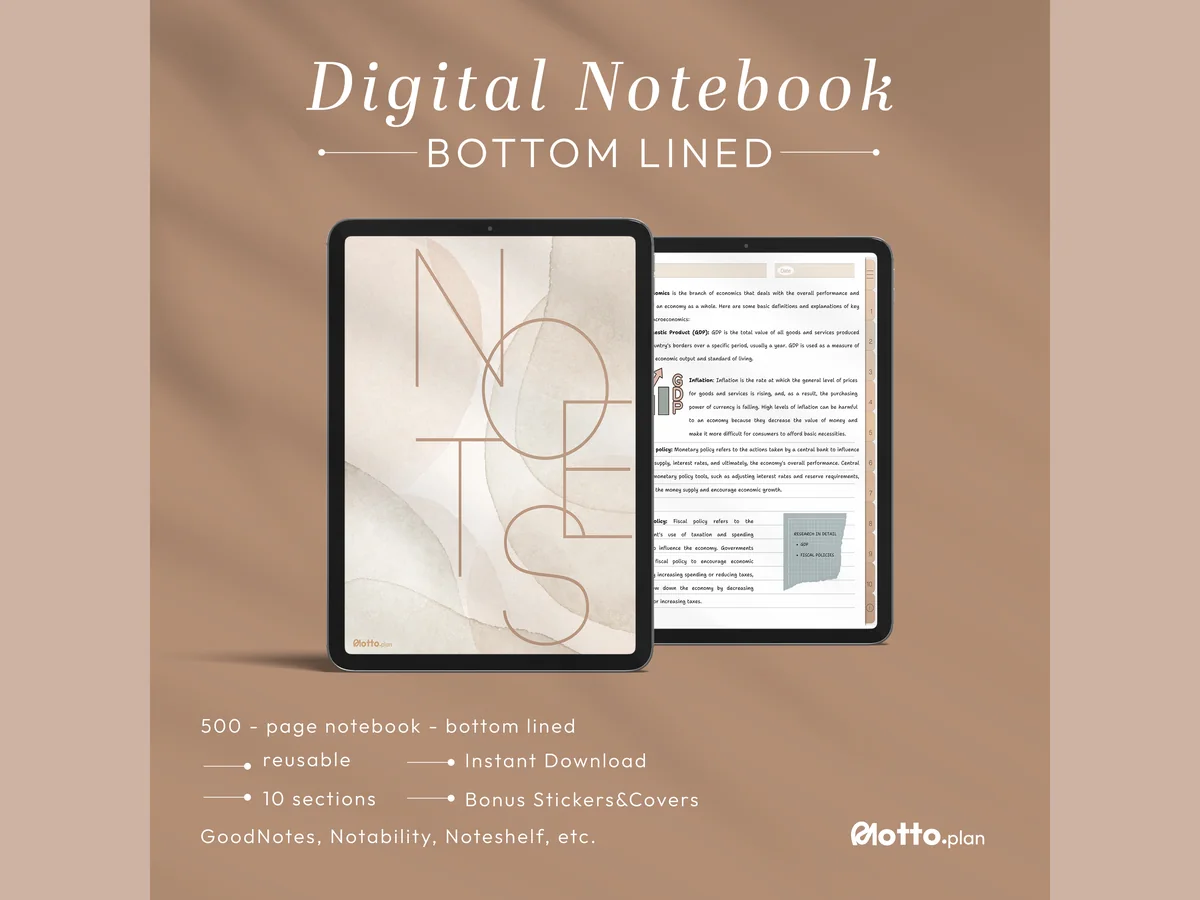
5. Digital Notebook 500 Pages Bundle – 2
Layouts: 10 sections; 500 ready pages
Best for: keeping a substantial archive. Designed by Motto Plan.
- Hyperlinked section dividers and an index
- Lined, bottom-lined, graph, dot grid and Cornell options
- PDF notebook, covers, user guide and sticker files
There is generous space here for someone who already writes long fragrance notes. Ten sections and five hundred ready pages make it less necessary to build an archive page by page. The neutral portrait layouts can hold short observations or extended reviews. That capacity suits an established writing habit; it may be more than a few occasional sample notes need. Audio and other app actions illustrated in a preview depend on the annotation app, not the PDF itself.
Daily and monthly journals for a wear diary
Best for a daily wear diary
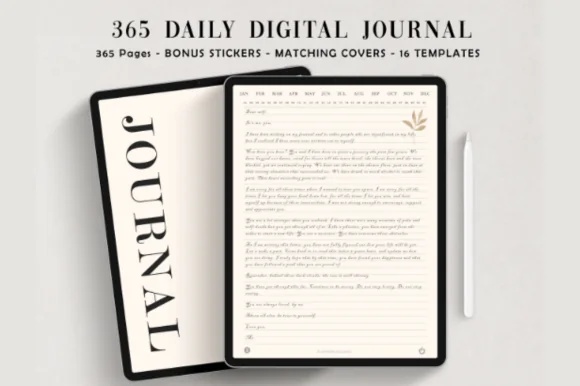
6. 365 Days Daily- Digital Journal
Layouts: 365 undated daily pages; linked navigation
Best for: one dated observation per wear day. Designed by ThePlannersDelight.
- Narrow-lined and wide-lined PDF versions
- 384 total pages; 16 page templates
- Bonus covers and botanical PNG stickers; GoodNotes and Notability named
This journal suits a calendar-first habit: open the day and write about the fragrance you wore. The ivory pages and choice of narrow or wide ruling let handwriting remain the main event. Undated pages with month and day links let you skip dates when you have nothing to record. Keep a separate handwritten fragrance index if you want to find every wear of one scent; daily navigation alone does not gather those entries for you.

Best for monthly wear notes
7. Digital GoodNotes Journal – Tie Dye
Layouts: Monthly linked dividers; 5 lined pages each
Best for: a compact month-by-month diary. Designed by Sarah Doodles.
- Undated hyperlinked PDF journal
- Pastel tie-dye monthly divider covers
- Additional lined pages can be duplicated in GoodNotes
The pastel dividers make a clear visual break between months. Use each month for the scents actually worn, then refer back to it when writing a monthly reflection. Only five lined pages are allocated per month initially, so frequent writers will need to duplicate pages. That is a useful distinction from the ready-made daily archive above. It is not a perfume-specific planner, and you supply every wear-log heading.
Best for loose impressions first
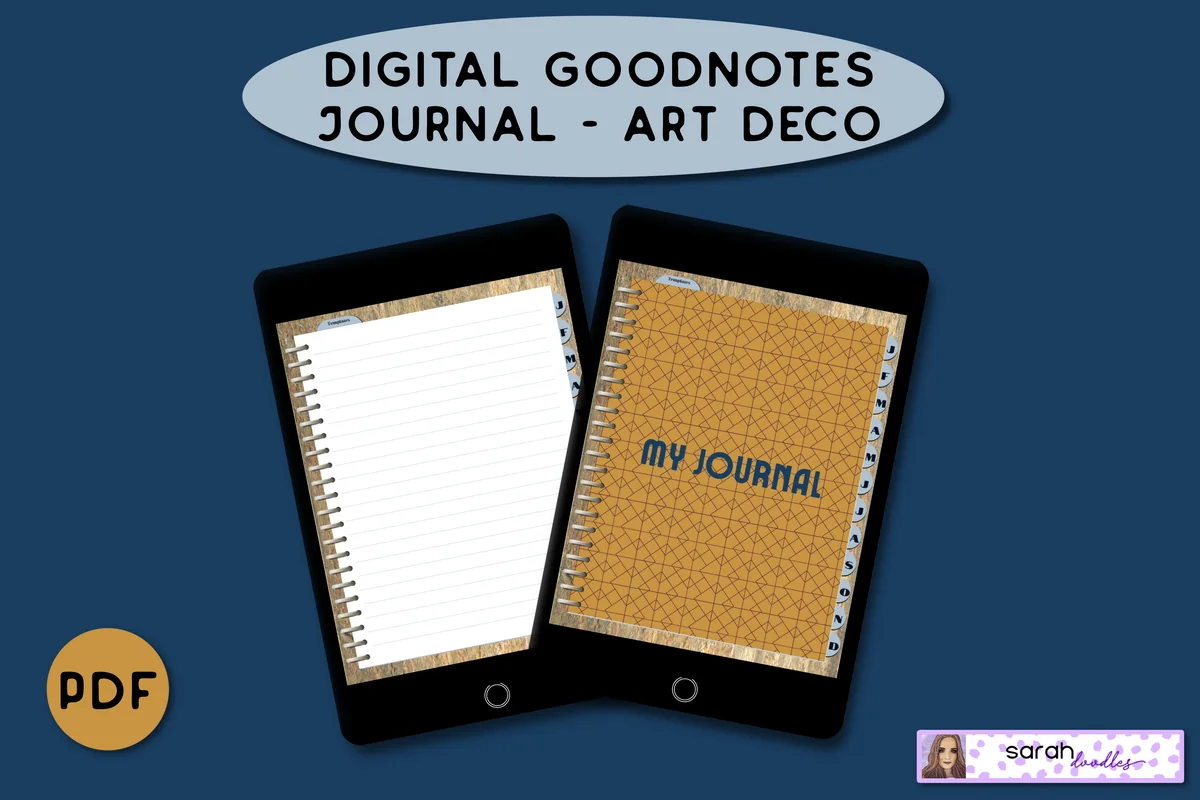
8. Digital GoodNotes Journal – Art Deco
Layouts: Monthly tabs; lined and brain-dump pages
Best for: capturing thoughts before organizing. Designed by Sarah Doodles.
- Undated PDF for annotation apps including GoodNotes
- Gold and blue Art Deco monthly covers
- Lined pages plus brain-dump and priority layouts shown
Unlike the Tie Dye journal, this version also shows brain-dump and priority pages. Those make it worth considering separately if you prefer to write freely first and summarize later. Use the open writing page for your immediate impressions, then move only the useful observations into a consistent wear record. The monthly organization is still the backbone. Choose between these two journals by workflow and cover preference rather than expecting different fragrance-specific tools.
Best for longer handwritten reviews
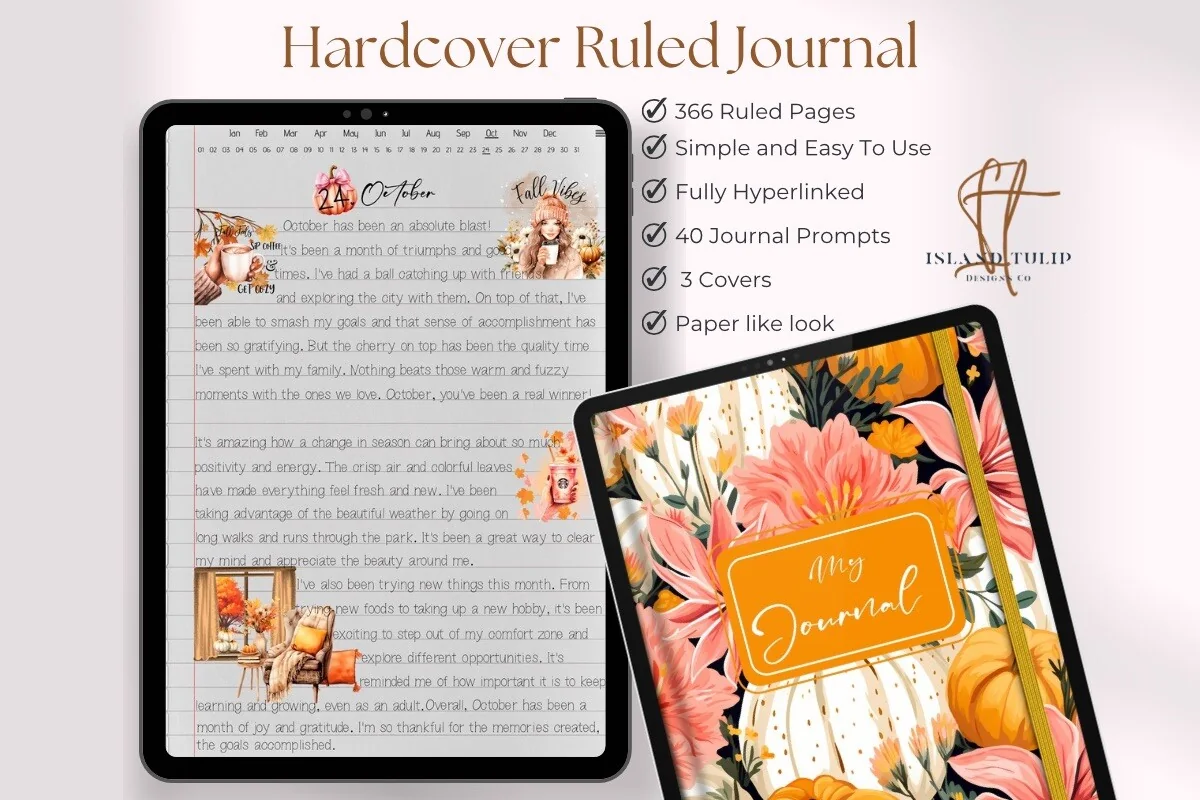
9. Digital Ruled Journal
Layouts: 366 ruled pages; linked month and day index
Best for: writing an unhurried wear account. Designed by Island Tulip Designs Co.
- Three floral covers
- Paper-like ruled daily page with navigation
- 40 PNG and precropped GoodNotes journal prompts
Ruled pages are a good fit when your impression needs sentences instead of scores. The floral covers and gray paper-like writing area are visually distinct from the ivory daily journal. Its index and day navigation are pictured, but the forty included prompts are general reflections, not scent questions. Add short fragrance headings and reserve a few lines for a later impression.
Paper sets and compact pages for a lighter habit

Best for building a custom wear sheet
10. Digital Notebook Papers – GoodNotes
Layouts: 9 paper designs; 8 layout types
Best for: choosing loose paper layouts. Designed by catsquills.
- Portrait papers for GoodNotes and Notability
- Columns, tracker, list, dot, square, lined and notes layouts
- PNG and PDF formats
If you already have a notebook you like, a paper set may be more useful than another full journal. The column layouts offer a starting point for time and impression notes, while plain lined pages can hold longer accounts. These are decorative papers, not completed fragrance forms. Add a column page for comparisons or a lined page for longer notes, keeping the rest of your existing setup. Do not choose this set expecting linked monthly dividers or a ready-made perfume collection index.
Best for short visual reminders
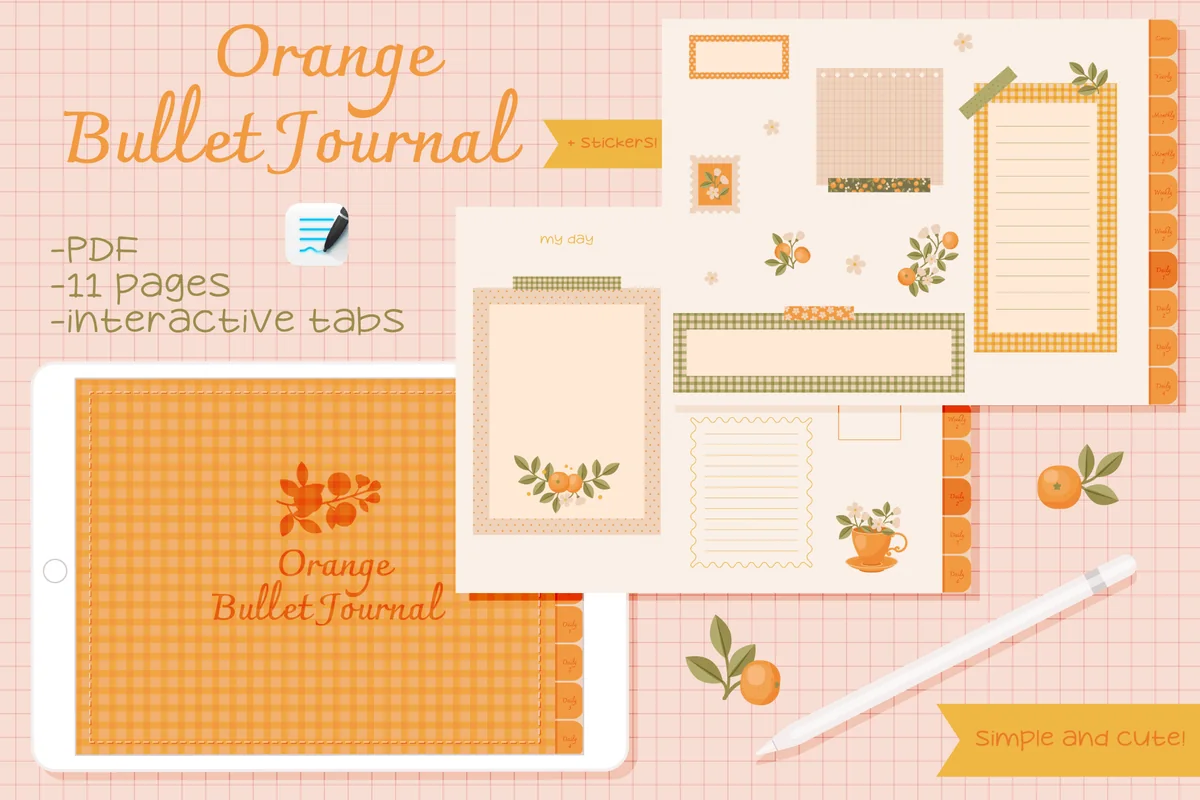
11. Undated Cute Orange Bullet Journal
Layouts: 11 pages; decorated frames and calendars
Best for: brief wear notes and retest reminders. Designed by digitaliya_studio.
- Interactive PDF with clickable tabs
- Fill-in calendar, weekly layouts and short writing frames pictured
- GoodNotes sticker file included
The orange illustrations and compact writing frames make this the most decorative choice here. A calendar can mark when you last wore a sample, while a short frame can hold one clear observation. It is less suited to an extended description of an entire wear. For a longer account, use the frame as a summary and add a reference to another page. The citrus decoration does not mean the journal includes citrus-fragrance information or fragrance-themed stickers.
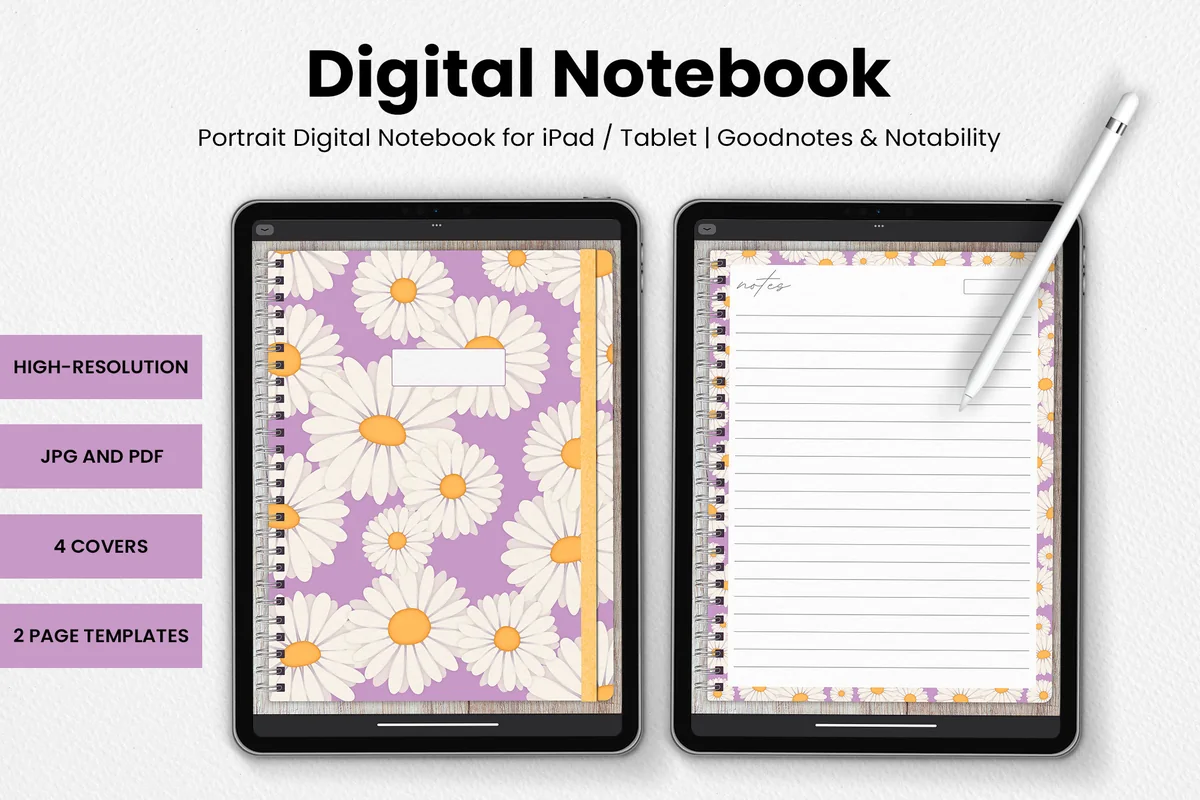
Best for simple floral note pages
12. DaisyNotes | Digital Notebook | Purple
Layouts: 4 covers; 2 page templates
Best for: a straightforward written scent diary. Designed by catsquills.
- Portrait digital notebook for GoodNotes and Notability
- Purple daisy borders and wood-textured backgrounds
- JPG and PDF files
DaisyNotes is the simpler alternative to the large tabbed bundles. The two note templates and four covers keep the choice manageable, and the daisy border gives a page a finished appearance before you write. A date and a consistent heading are enough to turn these lined pages into a scent diary. Plan to organize entries within your annotation app; a linked section system is not listed among this set’s features.
Quick Comparison
| Option | Structure | Useful for | Keep in mind |
|---|---|---|---|
| 1. Digital Notebook | 12 linked sections; 16 note templates | Comparing two wear records | Draw your own fragrance fields |
| 2. Watercolor Hyperlinked Digital Notebook | 12 linked sections; 3 page styles | Pairing a reference photo with handwriting | Fragrance headings are DIY |
| 3. Digital Notebook 5 Hyperlinked Tabs | 5 linked sections; 5 paper templates | Keeping five simple sections | No specialist scent forms |
| 4. Digital Notebook 5 Hyperlinked Tab | 5 linked sections; 30 paper templates | Trying several record formats | More templates require more setup |
| 5. Digital Notebook 500 Pages Bundle – 2 | 10 sections; 500 ready pages | Keeping a substantial archive | Large bundle, not a fragrance app |
| 6. 365 Days Daily- Digital Journal | 365 undated daily pages; linked navigation | One dated observation per wear day | Daily navigation rather than scent sections |
| 7. Digital GoodNotes Journal – Tie Dye | Monthly linked dividers; 5 lined pages each | A compact month-by-month diary | Five starting pages per month |
| 8. Digital GoodNotes Journal – Art Deco | Monthly tabs; lined and brain-dump pages | Capturing thoughts before organizing | Not an automatic tracker |
| 9. Digital Ruled Journal | 366 ruled pages; linked month and day index | Writing an unhurried wear account | Prompts are general journaling prompts |
| 10. Digital Notebook Papers – GoodNotes | 9 paper designs; 8 layout types | Choosing loose paper layouts | Paper set rather than tabbed journal |
| 11. Undated Cute Orange Bullet Journal | 11 pages; decorated frames and calendars | Brief wear notes and retest reminders | Small frames limit long reviews |
| 12. DaisyNotes | Digital Notebook | Purple | 4 covers; 2 page templates | A straightforward written scent diary | No linked section system promised |
18 perfume journal ideas, from first notes to a second wear
You do not need eighteen sections. Pick one wear page, one comparison page and one way to find them again. The ideas below are optional layouts to draw or label on general paper. Keep the first version plain until the headings prove useful.
Capture this wear before the memory blurs
- 1A three-line first impression. Write three short lines: what you notice, what it reminds you of, and what you want to revisit. Everyday words count. “Sharp like fresh peel” can be more useful to your future self than a technical term you are unsure about. Leave an empty line for a later correction rather than polishing the first impression into a verdict.
- 2A time-and-impression strip. Divide a page into three spaces labeled first note, later note and final note. Write the actual observation time in each space. A blank space means you did not record that moment; it should not imply the scent disappeared. This creates a readable account without inventing a continuous performance timeline from a few checks.
- 3A context header. Put the fragrance name, version or concentration as labeled, date, application time and where you tried it at the top. Include only details you actually know. For a partly labeled sample, copy the label and add “version unknown.” A clear header stops two similar names from silently becoming one entry.
- 4A one-sentence wear snapshot. Finish a note with “Today this felt…” followed by one concrete impression and the setting. For example, an invented entry might read “Today this felt soft and powdery during a quiet afternoon at home.” Keep the sentence personal. It records your response on that occasion, rather than claiming everyone will experience the fragrance the same way.
- 5A paper-versus-wear split. If you already have both observations, give them separate boxes with their own dates and context. Label a paper impression as paper; do not silently treat it as a full wear. You can leave the second box empty until you have a relevant observation. The value is remembering what kind of experience each note describes.
- 6A free-writing corner. Reserve a small area for the words that arrive before you have a tidy description: a place, a fabric, a color or an association. Keep it distinct from the structured fields so it can stay messy. Later, underline one phrase that still seems accurate. You do not need to convert every association into a fragrance note.
Compare impressions without forcing a final score
- 7A repeat-wear pair. Put two dated entries for the same fragrance side by side. Add a short footer with “same,” “different” and “still unsure.” This makes a changed opinion visible while preserving the original note. If the settings differ, write that beside the comparison instead of deciding the fragrance itself must have changed.
- 8A two-sample comparison page. Give each sample the same three headings, such as first impression, later impression and desire to revisit. Use the same amount of space on both sides. You can compare existing notes from separate days; this page does not require trying multiple scents at once. Finish with a difference you can actually describe, not a compulsory winner.
- 9A label-information box. Separate information copied from the brand or packaging from words you noticed yourself. Label the two areas “listed description” and “my impression,” and keep the source beside copied information. If a listed note never appears in your experience, leave that difference intact. A journal is more useful when it does not pressure you to reproduce the marketing.
- 10A personal words bank. Collect a few words you use repeatedly and add your own example for each. Perhaps “airy” means an impression you find light and spacious; another person may use it differently. Keep the definitions provisional. The purpose is consistency within your own notes, not creating an authoritative fragrance dictionary from personal associations.
- 11A question-led retest. Before returning to a fragrance, write one question you want the next entry to answer. “Do I still enjoy the later impression?” is easier to revisit than a vague instruction to test everything again. After the wear, answer the question or mark it unresolved. You can then decide whether another page would add anything useful.
- 12A preference-with-reason scale. If you enjoy ratings, define a small personal scale and always attach a reason. “Would wear again: yes, because I enjoyed the soft ending” preserves more information than a number alone. Keep preference separate from how noticeable you found the scent. A strong impression and an enjoyable impression are different things to record.
Make the journal easy to return to
- 13A fragrance-to-page index. List a fragrance name with the dates or page numbers of its wear entries. Add a new reference instead of copying the whole entry into the index. Keep this small enough to scan. It is a route back to observations, not a second collection inventory with every purchase detail repeated.
- 14A current-trials queue. Keep a short list of samples you actually want to revisit and write a question beside each. Move a name out when the question is answered or you lose interest. This keeps the journal connected to curiosity rather than an obligation to finish every sample. No shopping or buying target is needed.
- 15A monthly return page. At the end of a month, choose a few entries worth rereading. Note which impression surprised you, which preference stayed consistent and which question remains open. Reference the original dates so the summary stays connected to evidence. You can skip a quiet month; this is a reflection page, not a streak tracker.
- 16An “opinion changed” note. Write the earlier impression, the newer impression and what you know about the difference in context. It is fine to stop at “I liked it more this time; I cannot explain why.” Keeping uncertainty visible is better than inventing a cause. Preserve both dated entries so the journal shows the change honestly.
- 17A reference-photo margin. Add your own photo of the sample label beside the entry if it helps distinguish similar names. Leave most of the page for handwriting. A clear label image is more useful here than a large decorative collage. If an image belongs to someone else, keep their usage terms in mind rather than assuming it comes with the notebook.
- 18A minimum-effort fallback page. Create one reusable page with just name, date, one impression and revisit: yes, no or unsure. Use it when a full account feels like too much. You can add a later note if you want, but a short honest observation is already a useful record. This prevents elaborate page design from becoming the price of keeping a diary.
Set up a repeatable wear page on your iPad
A lined or half-lined page gives you room for both headings and observations. Make one empty master page and use a copy for each entry. The exact duplication and link controls depend on your annotation app; check its current help if your controls differ.
A small setup you can revise later
- 1Choose a retrieval method. Decide whether you will return by date or by fragrance name. For dates, use a daily or monthly journal. For names and comparisons, use sections plus a handwritten index. Keep the first setup to a few sections rather than assigning every possible category before you have any notes.
- 2Write five reusable headings. Add name and context, first impression, later impression, final note and revisit question. Leave space beside each time-based heading for the time you actually write. Keep these headings on the empty master page, then copy that page within your app so the structure remains consistent.
- 3Fill only what happened. If you made one observation, write one observation. Do not fill later boxes from memory just to complete the page. You can mark them “not recorded” and leave a question for another occasion. This keeps a pretty layout from encouraging more certainty than your notes support.
- 4Review the layout after a few entries. Remove a field you repeatedly ignore and enlarge one that runs out of room. Keep old entries readable rather than rewriting them to match the new design. Add a small revision date to your master if the fields change, so differences between pages do not become confusing later.
What a useful entry looks like
This is an invented example of a handwritten record, not a review of a real fragrance. It shows how to distinguish an observation from an unanswered question without needing a numeric performance score.
- Header: Sample A, concentration unknown; Saturday at home; application time 10:00.
- 10:10: Bright, peel-like first impression. I am curious about the softer part underneath.
- 12:30: Softer and more powdery to me. I prefer this part to my first impression.
- Final note: No later observation recorded.
- Revisit question: Do I enjoy the beginning more on another day? See this entry when comparing.
Notice what the entry does not claim: a measured duration, a universal description or an explanation for why the impression changed. The timestamps describe when the writer made a note. That distinction keeps your scent diary useful even when your observations are brief.
Keep the wear journal separate from collection admin
A collection inventory can still be useful, but it answers a different question. Keep purchase details on a separate page if you want them. Let the main journal stay centered on what you noticed and what you want to revisit.
- Inventory: what you own and how you identify it.
- Wear log: what you observed on a particular occasion.
- Comparison: what differs between dated records.
- Retest queue: which unanswered question makes another wear worthwhile.
For a broader handwriting routine, the digital journaling ideas guide offers other kinds of entries. Keep this journal focused on one fragrance, one occasion and a note your future self can understand.
Turn a scent impression into a journal entry
Use scent journaling to practice describing one detail your nose notices, then connect it to a familiar source or memory. Try prompts such as “What does this remind me of?” and “Which part changed since the early impression?” You can develop a personal vocabulary without identifying every ingredient or matching someone else’s taste.
Write perfume examples as observations, not note lists
An invented entry could read: “I tried Sample A at home in September and wrote my first note after ten minutes. I noticed a vanilla-like sweetness, though I could not name the softer background. After two hours, it reminded me of dry wood, and I wanted to wear it again.” Keep the sample name and actual times in your own entry; these sentences illustrate a format rather than describe a real perfume.
Add a season field when you want to compare wears across the year. Record the weather and setting instead of assigning a scent permanently to summer or winter after one try. If you are running low on a sample, sign off the entry with a retest question before adding it to a shopping list.
Adapt perfume journal ideas from Pinterest to your own page
When you search Pinterest for a layout, choose one feature that leaves room for writing, such as a narrow photo margin or a comparison column. Recreate the structure with thin divider lines and your digital pens rather than copying another person’s entire page. Avoid adding so many decorative materials that the later-impression box becomes too small to use.
If you want perfume content ideas to share, turn a completed entry into a short review with the wear context, one comparison and your revisit decision. Keep private memories on the original page and share only the details you choose. Let your own observations guide the caption rather than borrowing an author’s verdict.
FAQ: Keeping a perfume wear journal
What should I write if I cannot identify fragrance notes?
Use plain descriptions, associations and whether you enjoy the impression. “Reminds me of clean fabric” is a valid personal note. Keep any note list copied from packaging in a separate labeled area so it does not become something you feel you must smell.
Do these notebooks include perfume journal templates?
The listings describe general-purpose digital journals, notebooks and paper sets. Use the page ideas above to create a perfume wear record with the headings you want. Choose a layout by how much you write and how you want to find earlier entries.
Can I use an existing notebook instead of buying another one?
Yes. Start with any suitable page in your existing annotation app and add a few headings. Consider another template only if you need a specific structure, such as linked sections or a daily index. The paper set above is also an option for adding layouts without replacing your whole notebook.
How often should I update my scent diary?
Write when you have an impression you want to remember. A single entry per wear is enough to start; add later observations when useful. There is no required streak, and empty dates do not need to be filled.
Will a PDF automatically organize my fragrances?
No. Linked tabs take you to the notebook’s existing pages. They do not create a fragrance database, calculate ratings or gather every entry about one scent. Use your own index or your annotation app’s organization tools, checking which features your app supports.
Leave room for a different impression next time
Give these perfume journal ideas a practical job: making a second wear easier to compare with the first. Start with a short dated record, leave room for a later observation and keep your own words separate from the label description. Choose a notebook by how you will find those entries again, then let the page design grow around the habit.
You May Also Like
This article contains affiliate links. If you purchase through them, I may earn a commission at no extra cost to you. Read the affiliate disclosure.