You finish an album, but a day later you can only remember whether you liked it. These music journal ideas help you capture a detail you heard, a question about a recording, or a track that felt different on the second listen. Start with one album and one page on your iPad. Keep a music listening journal small enough that writing leaves time for listening.
Below are fifteen page ideas, a simple listening routine and six notebook and page options for building your own layouts. The notebooks are general digital pages, not prefilled music journals. My selection is based on product descriptions and previews; I have not tested the purchased files.
Music journal ideas for three kinds of listening
Pick the group that matches your next listen. You do not need to complete all fifteen pages, rate every song or know music theory. A useful entry can be a precise sentence about one moment.
Begin with an album
- 1Keep an album queue. List the artist, album, who suggested it and one reason to try it. Leave a small space for the date you actually listened. Limit the queue to a handful of albums so choosing one stays easy; a recommendation is an invitation, not a task you owe someone.
- 2Make a first-listen card. Write the album and recording version at the top, then three fields: first impression, moment that caught my ear, and question for another listen. Finish before reading a review if you want to preserve your own response. You can disagree with that first impression later without crossing it out.
- 3Follow one track closely. Choose one song and describe what changes from the opening to the ending. Use plain words such as sparse, busy, warm or abrupt. A note like “the backing voice arrives after the quiet opening” is more useful to revisit than a row of stars with no explanation.
- 4Map the album sequence. Write track titles down the left and a short observation beside each. Mark a transition you enjoyed or a pause that changed the mood. This is about your experience of the sequence; you do not have to identify what the artist intended or force the album into a story.
- 5Record the listening context. Add where you were, what else you were doing and how much attention you could give. A distracted commute and a quiet evening can produce different notes. Keep that context beside the reaction so a later entry does not make the earlier one seem inexplicably brief.
Listen for something new
- 6Compare two recordings. Put the same piece or song in two columns, identifying artist, version and any release detail you can verify. Compare one feature, such as pace, vocal phrasing or the ending. Different versions may have different running times, so identify each moment separately instead of assuming matching timestamps.
- 7Trace an instrument or texture. Follow one sound through a track: the bass line, a repeated rhythm, a backing voice or an electronic texture. Note when it becomes noticeable and what changes around it. If you cannot identify the instrument, describe the sound rather than giving it a confident but uncertain name.
- 8Make an artist discovery trail. Start with the song that introduced you to an artist. Draw a short trail to an album, collaboration or earlier recording you want to hear. Add why each connection interests you. This can stay a personal discovery map rather than becoming a complete biography or discography.
- 9Try a small genre map. Choose a style you rarely hear and leave space for three recordings. For each, note something familiar and something you want to understand better. Avoid judging an entire genre from one track. Add the source of a genre label if it came from an artist page or review.
- 10Keep a recommendation exchange. Give a friend’s recommendation its own row: suggested by, reason given, track tried and your response. Note a question you could ask them afterward. Their favorite detail may be different from yours, and that difference gives you something more interesting to discuss than matching scores.
Return and connect
- 11Choose an album of the month. Select the album you most want to remember, rather than the one you think deserves a public award. Write the reason, one standout moment and a track to revisit. Leave a line for an album you nearly chose so the page captures the month without pretending to rank everything.
- 12Preserve a second-listen response. Return to the same recording on another day. Read the old note only after you have written a new observation, then compare the two. Did a previously overlooked track stand out? Keep both dates visible. Changed taste is part of the record, not evidence that an earlier entry was wrong.
- 13Compare a concert memory with a recording. If you attended a concert, separate what you remember from what you can check in a recording afterward. Describe the room, arrangement or audience moment in your own words. Use a set list only when you have a reliable one; an incomplete memory can remain incomplete.
- 14Build a playlist around an occasion. Choose a specific occasion, such as cooking dinner or a quiet train ride. List a few songs and the reason each belongs, rather than only copying their titles. Keep the playlist in your music service and the explanation in your journal. The PDF page is a companion to playback.
- 15Create an artist and album index. Reserve a page for artist, album, entry title and page reference. Add the reference when you finish an entry, while you still know where it is. For a chronological journal, include the month and date. For a sectioned notebook, include the section name as well as the page title.
For a small first page, combine ideas 2, 3 and 5: identify the recording, describe one sound and add the listening context. Leave the larger maps and monthly summaries until you have entries worth connecting.
Six iPad notebooks and page sets for listening notes
Choose one notebook, not six. The first three emphasize organization, the next two emphasize the writing surface, and the last offers compact writing frames. Every album field, timestamp and music prompt below is something you add yourself.
TL;DR: Six alternatives for handwritten listening notes on iPad: sectioned pages for comparisons, ruled journals for entries in sequence, and decorated frames for compact responses. All require your own music headings.
Quick Picks
- Best for album comparisons: Digital Notebook
- Best for a daily listening diary: Digital Ruled Journal
- Best for monthly album notes: Digital GoodNotes Journal – Tie Dye
- Best for dark page layouts: Dark Mode Digital Notebook – Gold Theme
- Best for simple lined notes: DaisyNotes | Digital Notebook | Purple
- Best for compact listening cards: Undated Cute Orange Bullet Journal
- Digital Notebook – Best for album comparisons
- Digital Ruled Journal – Best for a daily listening diary
- Digital GoodNotes Journal – Tie Dye – Best for monthly album notes
- Dark Mode Digital Notebook – Gold Theme – Best for dark page layouts
- DaisyNotes | Digital Notebook | Purple – Best for simple lined notes
- Undated Cute Orange Bullet Journal – Best for compact listening cards
Organize albums and repeat listens

Best for album comparisons
1. Digital Notebook
Orientation: LandscapeLayouts: 16 note templates; 12 sections
Best for: comparing impressions and sound details side by side. Designed by Shades of Zen.
- 12 expandable sections with individual dividers
- 16 note templates, including ruled, graph, dotted and Cornell pages
- Two-column layout pictured among the templates
- GoodNotes import; hyperlinked section tabs
The two-column page gives an album review a useful split: what you hear on one side, what you think on the other. I like the twelve sections for a small set of genres or artists, with an album index inside each. Choose this for comparisons and page variety; it is a general notebook, with no track database or music-specific prompts.

Best for a daily listening diary
2. Digital Ruled Journal
Orientation: PortraitLayouts: 366 ruled pages; month/day index
Best for: writing longer responses in listening order. Designed by Island Tulip Designs Co.
- 366 ruled pages
- Three cover choices
- Month and numbered-day index without a printed year
- 40 general prompts in PNG and precropped GoodNotes formats
A daily page leaves room for the part of an album that takes a paragraph to explain. The index shown follows months and numbered days, so this is the strongest match here for a listening diary in sequence. Finding every entry about one artist will need your own index. The included prompts are general journaling extras; do not expect album-review questions, automatic ratings or a streaming connection.
Best for monthly album notes
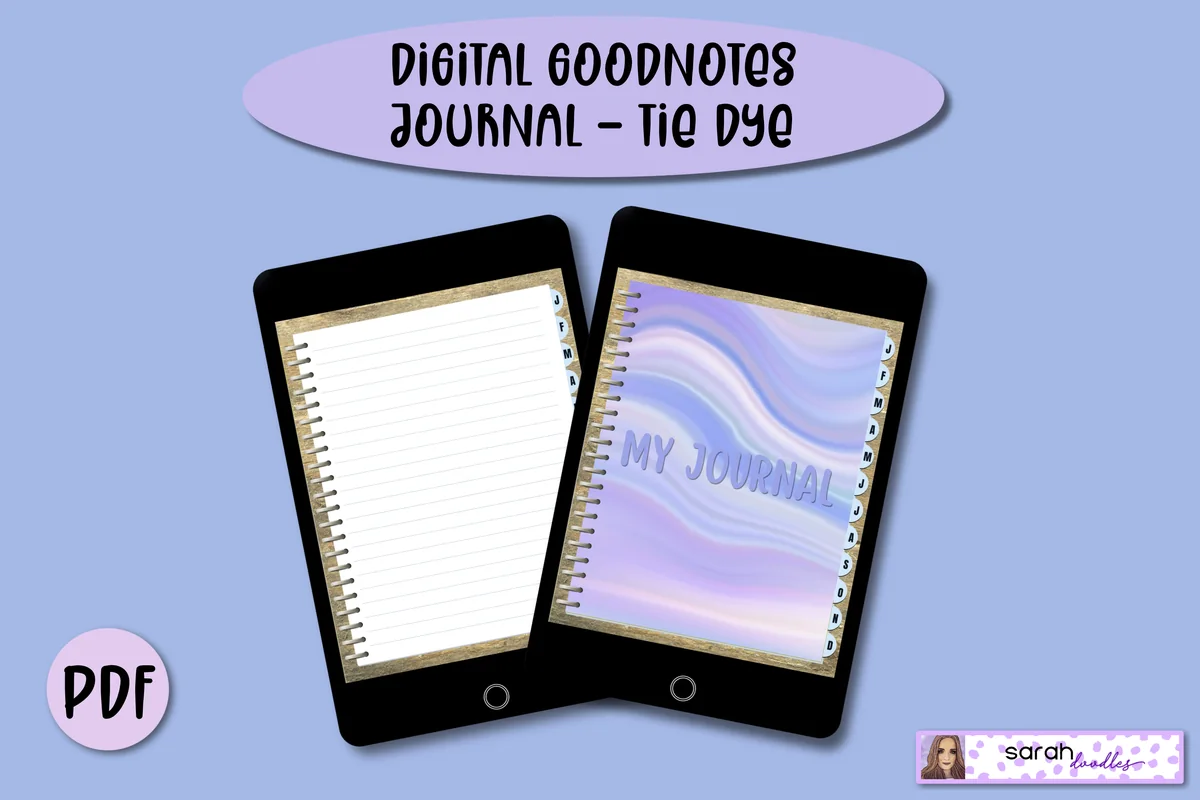
3. Digital GoodNotes Journal – Tie Dye
Orientation: PortraitLayouts: 5 lined pages per month; monthly dividersDates: Undated
Best for: keeping a small listening collection by month. Designed by Sarah Doodles.
- Hyperlinked PDF with a divider for each month
- Five lined pages allocated per month
- Instructions for adding pages in GoodNotes
- For GoodNotes, Notability and Xodo
Monthly sections make this a straightforward home for an album-of-the-month page and a few shorter entries. Five starting pages per month is a useful limit to notice before choosing it: frequent listeners may need to add pages. The seller explains that workflow for GoodNotes, but I have not tested the purchased PDF. Keep an album title at the top of each entry; monthly tabs alone will not locate a particular recording.
Choose a writing surface
Best for dark page layouts
4. Dark Mode Digital Notebook – Gold Theme
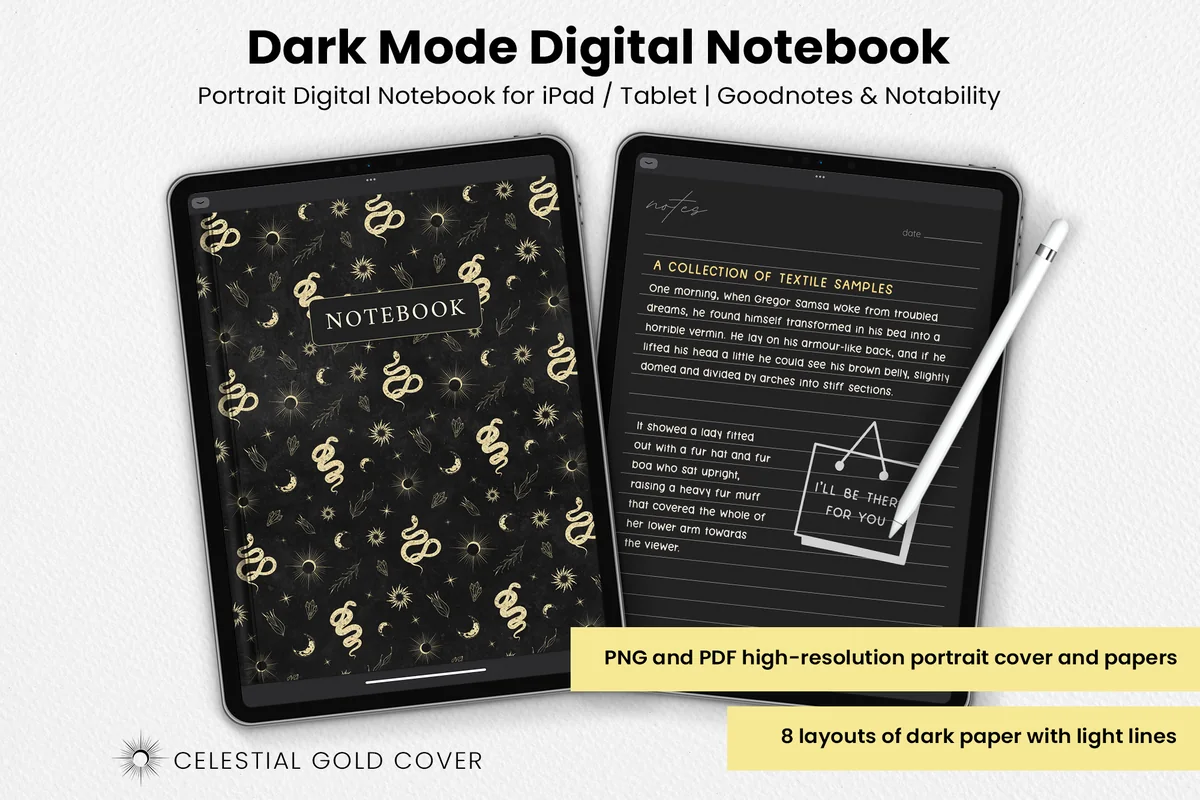
Orientation: PortraitLayouts: 8 dark paper layouts
Best for: making contrast-based track notes and comparison columns. Designed by catsquills.
- One celestial gold cover and dark notebook
- Eight layouts: columns, habit tracker, to-do, numbered list, dots, squares, lines and notes
- PNG and PDF formats
- For GoodNotes and Notability
The column layout can hold a timestamp beside a sound detail, while the numbered list can become a short queue of albums. Dark paper is the difference that matters here. Check that your chosen pen color stays legible before building a whole spread, especially over the fine grid. This is a cover-and-paper notebook set, not a player, and the listing does not establish a linked music index.

Best for simple lined notes
5. DaisyNotes | Digital Notebook | Purple
Orientation: PortraitLayouts: 2 page templates; 4 covers
Best for: keeping uncluttered album responses on floral pages. Designed by catsquills.
- Purple daisy design with a wood-texture background
- Four covers and two page templates
- Lined writing page shown
- JPG and PDF formats for GoodNotes and Notability
For a short album response, a lined page may be enough. DaisyNotes keeps the choice small: four covers and two page templates, rather than a large system of sections. The pictured floral border and wood texture give the page a distinct look, but leave less flexibility than the sixteen-template notebook above. Add your own date, artist and recording version. The small layout selection suits prose entries better than a detailed listening catalog.
Keep reactions compact
Best for compact listening cards
6. Undated Cute Orange Bullet Journal
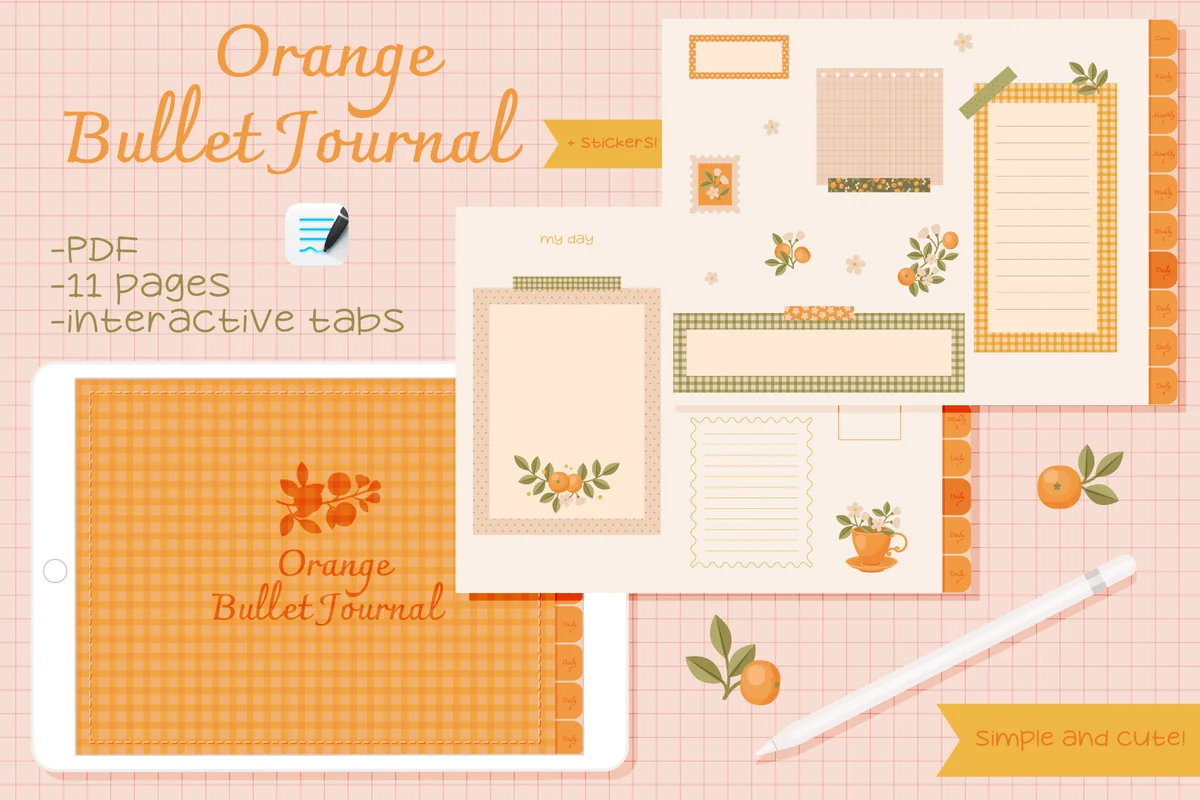
Layouts: Decorated writing frames; fill-in calendarDates: Undated
Best for: placing one brief reaction in a decorated frame. Designed by digitaliya_studio.
- Interactive PDF journal with GoodNotes import instructions
- Unfilled calendar and small writing frames pictured
- Stickers in GoodNotes format
- Orange, cream and green decoration across the previews
One frame could hold a track title, a few words about the sound and a reason to replay it. The small writing areas make that constraint visible, which I like for quick reactions. The calendar can hold listening reminders that you enter yourself. The small frames leave limited room for extended analysis; add track titles and any artwork yourself.
Quick Comparison
| Option | Page structure | Listening use | Keep in mind |
|---|---|---|---|
| 1. Digital Notebook | 12 sections; varied layouts | Album comparisons and genre folders | Create your own music fields |
| 2. Digital Ruled Journal | Ruled pages; chronological index | Long listening responses | Add an artist index manually |
| 3. Digital GoodNotes Journal – Tie Dye | Monthly dividers; lined pages | A modest monthly album collection | Five starting pages per month |
| 4. Dark Mode Digital Notebook – Gold Theme | 8 dark layouts | Columns, short lists and dot-grid notes | Use a contrasting pen color |
| 5. DaisyNotes | Digital Notebook | Purple | 2 templates; floral covers | Brief written album impressions | Less layout variety |
| 6. Undated Cute Orange Bullet Journal | Small frames; fill-in calendar | One-song cards and listening reminders | Limited room for long analysis |
Set up a music listening journal you can find again
A consistent heading matters more than an elaborate cover. Make one reusable entry structure first, then give it a place in the notebook. A section can represent a genre or an artist, while a dated journal can follow the order you listened.
- Identity: artist, album or track, recording version, and listening date.
- Observation: one sound or change you can point to, with a timestamp if helpful.
- Response: what interested, surprised or disappointed you, in your own words.
- Return: a question for next time and an index reference.
For example, an invented note could read: “Track 4, studio version, 1:18: a second voice joins the refrain. It makes this section feel wider to me. On the next listen, follow the backing voice instead of the lead.” The observation, personal response and next question have different jobs, so keep them visibly separate.
Choose a page by the kind of note you make
A music review journal does not need the same layout as a one-song diary. Use the comparison below to choose a structure before decorating it. These are suggested uses for general pages, not features promised by every notebook.
| Entry | Page to use | What to keep visible |
|---|---|---|
| Album response | Lined or Cornell page | Recording identity, observation and response |
| Two-version comparison | Two columns | Version names and separate timestamps |
| One-song memory | Small frame or blank card | Song, occasion and your own words |
| Listening index | List or grid page | Artist, album and an entry reference |
Keep a ratings key only if numbers help you. A score can mean enjoyment, curiosity or desire to replay; mixing those meanings makes later comparisons confusing. You can also use words such as “return,” “unsure” and “finished for now” without turning listening into a competition.
A short listening routine for beginners
Keep the first routine modest: one recording and one question are enough. These steps also work for music journal ideas for students who want to explore recordings independently, without converting the page into a practice-session log.
From a recording to a useful entry
- 1Choose and identify. Open one track or album in your usual music player. Write its name, artist and version on the journal page before you begin. Decide on one listening question, such as how the texture changes, so you have a manageable focus.
- 2Listen, then make a note. Give the music your attention before filling the page. Pause afterward to record one specific observation and your response. If you use a timestamp, check it against the same recording. Leave an uncertain detail as a question rather than researching every sound immediately.
- 3Save a reason to return. Add the entry to your index and write one next-listen prompt. Stop there if the note says what you wanted it to say. More decoration or a longer review is optional; the page has already captured something you can revisit.
For more music journal prompts, change the question rather than rebuilding the page: Which transition held your attention? What did you miss the first time? What makes this recording different from another version? A familiar structure gives those changing questions somewhere to land.
Keep the page personal and the technology simple
Two useful starting points are the Living on the B-side guide to music journaling and WashiGang’s prompts for music lovers. Both connect songs with personal responses and memories. Use those connections to give a listening entry a focus: the song, the memory and what you notice now.
- Playback stays separate. These notebook listings describe digital pages. They do not establish automatic Spotify or Apple Music imports, listening-history tracking or audio recognition.
- Write your own response. A song title and a paraphrase of what matters to you can be enough; you do not need pages of copied lyrics.
- Keep visual additions optional. Original drawings, color marks or a personal concert note can carry a memory without requiring album artwork.
- Try an existing page first. If a blank page in your current notebook works, you do not need a specialist purchase to begin.
Music bullet journal ideas can be as simple as a listening queue, album-of-the-month box and a short index. Keep enough clear space for the actual note. A beautiful spread that hides the recording title will be harder to use when you want to compare it with another entry.
FAQ: music notes on your iPad
What should I put in a music journal?
Start with the recording name, artist, date, one observation and your response. Add context or a question for the next listen when it helps. An album review, a one-song memory and a comparison of two versions can share those basic fields without needing identical lengths.
How is a listening journal different from a music practice journal?
A listening journal records your experience of music you hear. A practice journal usually follows work on an instrument or voice, such as exercises, goals and progress. This article focuses on albums and recordings; it does not provide instrument instruction or a practice schedule.
Do I need music theory to write useful notes?
No. Describe what you notice in ordinary language: a voice entering, a repeated sound or a sudden quiet section. If a technical term is unfamiliar, write the observation first and leave a question to investigate. You do not need to label every chord to keep a worthwhile entry.
Can these notebooks work as a music journal app?
They are general notebook files for compatible annotation apps, not dedicated music apps. Check the named app and file format on the listing before choosing one. The pages do not provide a verified streaming connection, automatic album catalog or listening statistics.
Which music journal template should a beginner use?
A lined page with four headings is enough: recording, observation, response and next listen. Try that before choosing a more elaborate template. If you mostly compare versions, use two columns; if you write short reactions, a compact frame may suit you better.
How often should I write a listening entry?
Choose a pace you can enjoy, such as one album when you have time to listen attentively. You do not have to journal every day or finish a monthly quota. A short entry with a useful detail is easier to return to than a long page written only to keep a streak.
Leave yourself a reason to press play again
Choose one of these music journal ideas for your next album, then keep the page small: identify the recording, notice one detail and leave one question. I like that approach because it gives your next listen a starting point without turning it into homework. The right notebook is the one that keeps those observations easy to write and find.
You May Also Like
This article contains affiliate links. If you choose a product through one of these links, I may earn a commission at no extra cost to you. Read the affiliate disclosure.