You open the half-finished sketch, pick up the yarn or find a tray of seed labels, then wonder what you were going to try next. These hobby journal ideas preserve the details that disappear between sessions. A few clear notes can help you return without rebuilding the whole story from memory.
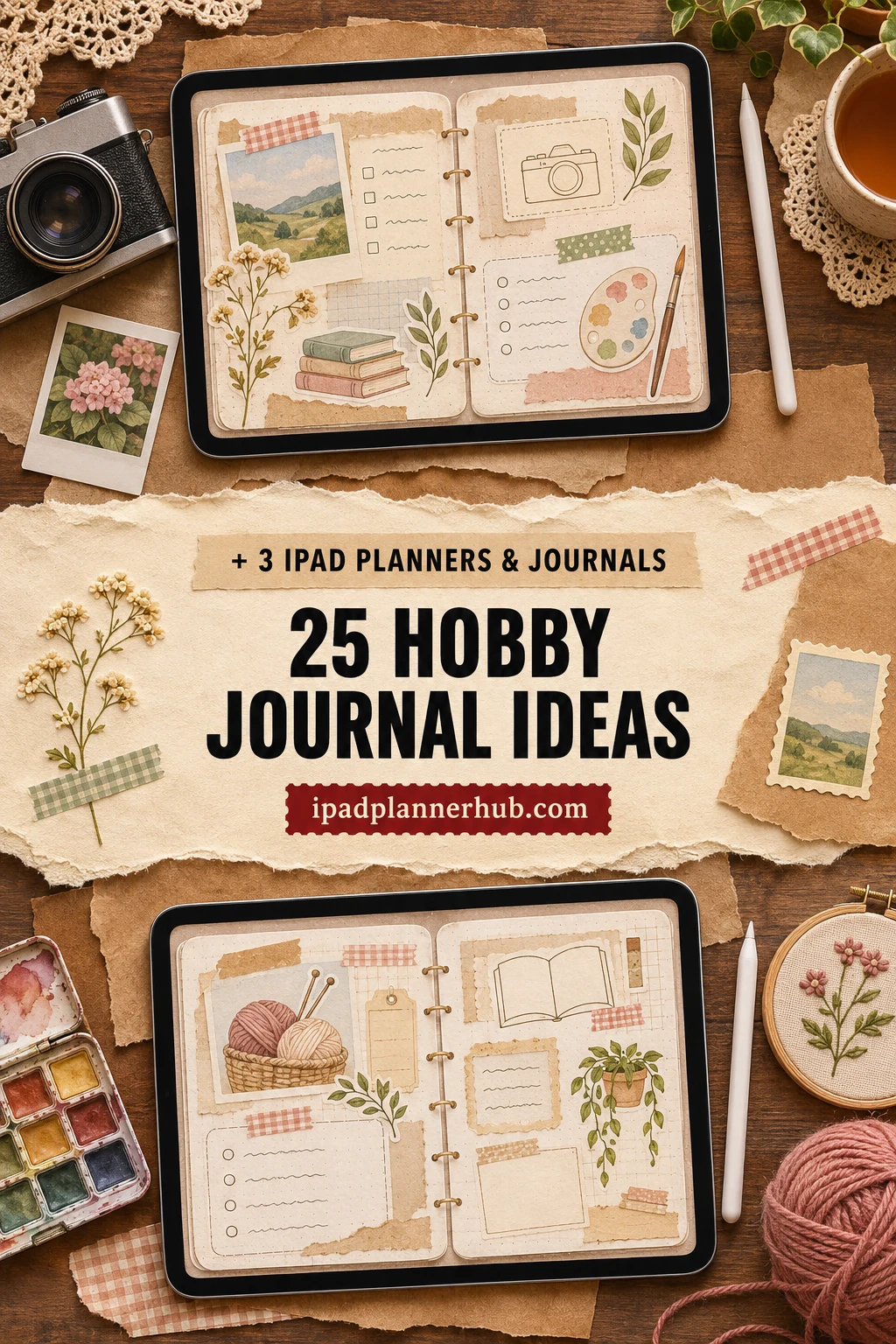
On your iPad, a hobby journal can hold experiments, observations and decisions alongside photographs of your work. It does not have to prove that you are productive, and it need not turn a relaxing interest into a schedule. I would make the first page useful to the next session: what you tried, what you noticed and what to open first. A finished-work gallery can come later, once you have something you want to keep.
Coffee brewing can use that same trial-and-observation approach, with a bean label and recipe beside each cup note. The coffee tasting journal layouts show how to connect repeat cups and record what changed, keeping your own impressions separate from the roaster’s description.
Choose a Starting Point for These Hobby Journal Ideas
Choose one hobby for the first section, even if you enjoy several. Give entries a date and a short name, such as fern sketch or blue scarf sample, so a photograph has context. Borrow the page ideas that fit the way you practice. A birdwatching note may need location and uncertainty, while a watercolor trial needs paper and color details. You can keep both in a notebook without forcing them into identical forms.
A listening hobby needs different notes from a photograph of finished work. These music journal ideas focus on details you heard, questions about a recording and what changed on another listen, rather than turning the hobby into a production log.
Make It Easy to Sit Down and Begin
- 1Hobby home page
Make a home page for one interest with what draws you to it, what is already available and what you would like to explore. For watercolor, you might list a small paint set, a brush and an interest in painting leaves. Keep aspirations separate from equipment you own.
Add a photograph of your current materials if helpful. This gives the section a clear boundary without requiring an ambitious project, a shopping list or a promise to practice every day before you have begun.
- 2Current practice menu
List a few activities that fit different amounts of available time. A short slot might hold a pencil value study, while a longer one could allow a more involved sketch. Include setup and putting things away when judging what fits.
Write the materials beside each option so you can choose without searching through several pages. These are invitations rather than quotas: the menu should reduce the decisions between you and a hobby, not become another set of tasks that you feel behind on.
- 3Session bookmark
End a session with a bookmark for your next self. Record where you stopped, what to open first and the next physical action. For a knitting sample, include the pattern location and the row you have verified rather than guessing later from a photograph.
For a drawing, note which reference you were using and which area needs attention. A specific return cue is more useful than continue project, especially when several unfinished pieces look almost identical in a folder or basket.
- 4Experiment card
Set up a small comparison with the question, what you will change and what you will keep similar. A watercolor page might compare two amounts of water on the same paper. Label the samples before you forget which is which, then describe the result without deciding that one trial proves a universal rule.
Add one possible next test. This page is for learning from a limited experiment, so an inconclusive result belongs in the record as honestly as a clear difference.
- 5Material sample notes
Give a material sample a label that connects it to the conditions of the trial. Record the material name, relevant size or type, what you did and what you noticed. For paper, a useful observation might concern how a particular wash behaved on that sheet.
Add a photograph or sample identifier so you can compare it later. Keep first impressions separate from long-term claims about durability or performance; one afternoon of use cannot tell you everything about a material or how it will behave elsewhere.
Keep the Details Behind a Useful Trial
- 6Tool settings
Record settings that mattered to a repeatable, ordinary task, together with the tool or app version where relevant. A digital drawing note might save the brush name, size and opacity used for a particular mark. Include a small image of the result rather than numbers alone.
Treat these as a record of your setup, not instructions for every tool. For equipment with safety requirements, follow the manufacturer’s guidance and appropriate instruction; a personal journal is not a substitute for those directions.
- 7Practice comparison
Place two of your own attempts side by side and caption each with the date and conditions. Compare one feature, such as the spacing of drawn shapes, instead of judging the whole page as good or bad. Note a difference you can actually see and one adjustment you want to try.
If the materials or reference changed, record that too. This makes the comparison more informative than a dramatic before-and-after image that hides all the other reasons the two attempts look different.
- 8Technique questions
Keep a question page for moments when you do not know what to change. Describe the result you wanted, what happened and what you have already tried. A crochet question might include the pattern step and a photograph of the area that confuses you.
Bring it to a class or consult an appropriate guide, then add the answer with its source. A precise question helps someone respond; a general note that you are bad at a technique gives them much less to work with.
- 9Reference with credit
Save a reference with the creator’s name, title or location and the specific feature you want to study. For a landscape painting, that might be the arrangement of light and dark shapes rather than the whole composition. Use images only where you have permission, and label a study as a study.
Add what you intend to explore in your own work. Keeping credit beside inspiration makes it easier to return to the source and avoids confusing somebody else’s finished piece with your own idea.
- 10Skill ladder
Break one interest into small skills you would like to explore, with an observable exercise for each. A beginner photographer might practice finding a clear subject before moving to a more complicated scene. Keep the order flexible and avoid treating the list as a ranking of your worth.
Record a trial beside the skill when you attempt it, including what remains confusing. The ladder should help choose a next exercise, rather than demand mastery of every foundation before you are allowed to enjoy the hobby.
Choose Work and Use What You Have
- 11Project choice page
When saved ideas start competing, give a few candidates a brief comparison: interest, materials available and the first step. Suppose you are choosing between a small drawing, a large painting and organizing a reference collection. Circle the option that suits the kind of session you want now.
Put the others in a later box instead of declaring them abandoned. The choice page is useful when the obstacle is too many appealing possibilities; it should not force a hobby into a numerical scoring system.
- 12Work-in-progress snapshot
Take a photograph or screenshot of your own work and add a caption explaining the current state. Include the date, what changed this session and the decision still open. A photograph of a partly sewn bag might need a note about which pieces are only pinned in place.
Avoid relying on the image to tell you everything later. A short caption preserves details that may become invisible after the next step, particularly if you undo a version or cover an earlier layer.
- 13Materials already owned
Make a small inventory tied to the work you actually want to do. Include the item, where it lives and any limit that matters, such as too little yarn for a large piece. A photo of labeled materials can be enough; you do not need to catalogue every object in the room.
Before buying something for the next project, check this page. Record usable leftovers without promising that every scrap needs a purpose or that keeping an item obliges you to use it.
- 14Shopping only when needed
Give a possible purchase a reason: the project it supports, the amount or type needed and what you have already checked at home. For a sketchbook, the reason might be a page size that fits a planned series, rather than a vague wish to become more organized.
Leave a space for an alternative, including borrowing or changing the project. This page separates a concrete need from a passing temptation without turning every hobby expense into a judgment or encouraging you to buy before trying.
- 15Small project overview
Use one overview for a particular piece of work, with the intended result, materials, constraints and the next few stages. For a handmade gift, note the recipient’s relevant preferences and the point at which you need to choose a size or finish.
Keep the scope small enough to see on one page. If you need a fuller structure for milestones and actions, our project planners for iPad cover that task separately; the hobby journal can stay focused on practice.
Notice What Changes During Practice
- 16Change log
Record a change while you still remember why you made it. Use three lines: previous plan, new choice and reason. A scarf might become shorter because the available yarn suits that version better, or a sketch may lose a background that distracts from the subject.
Add a dated photo when the change is visible. The log helps you understand the work’s path without pretending every decision was planned from the beginning, and it gives you a reason to revisit if the change causes another problem.
- 17Mistake worth keeping
Keep a failed attempt when it teaches something specific. Note what you expected, what you observed and one thing to change next time. A muddy color trial might lead to a smaller comparison of two mixtures, rather than a conclusion that you cannot paint.
Save a sample or photograph if it will be useful, but do not require yourself to preserve everything. The page should reduce repeated confusion, not create a permanent display of every mistake or turn an ordinary learning moment into a verdict.
- 18Comfortable session length
After a session, record the approximate time including setup, what you managed comfortably and where attention or energy changed. You might discover that a small sketch fits an evening better than preparing a whole painting area. Treat that as information for choosing activities, not a rule that you must always work for the same length.
Note interruptions when they explain the experience. The aim is to make returning easier, without claiming that one timing pattern will improve skill or suit every week.
- 19Class notes
Choose one exercise or explanation from a class and rewrite it in your own words. Add the instructor or resource, the lesson location and a question you still have. For a drawing class, the useful takeaway might be how to compare two angles before adding detail.
Try a small example of your own afterward and label it with the same lesson reference. This turns a page of class notes into something you can revisit, while keeping somebody else’s teaching distinct from conclusions you reached yourself.
- 20Inspiration to test
Turn inspiration into one limited trial. If you admire a photograph’s framing, describe the feature and plan a different subject to explore it with. Give the source proper credit and write what would make the trial informative, such as comparing two crops.
Keep the experiment small so you can begin with materials already available. This page differs from a mood board because it ends with an action you can attempt, while leaving the reference as a starting point rather than a result to reproduce exactly.
Finish, Pause or Return on Your Own Terms
- 21Finished-work record
Make a record of a finished piece with its title, date, image and a few sentences about the result. Include materials or settings that would matter if you wanted to make a related piece. Write one thing you like and one thing you would change, if anything.
Finished can mean you chose to stop, not that the work has no flaws. The page lets you remember a piece after it is given away or put aside without requiring you to share it publicly.
- 22Pause-and-return page
When a hobby pauses, leave a return page with the state of the work, the location of materials and the first manageable step. Record anything that needs checking before you resume, such as whether a saved pattern note still matches the piece. A later return might begin with reading the page rather than immediately doing more work.
There is no need to apologize for the gap. The page exists to preserve a route back while allowing your interest, circumstances and available time to change.
- 23Sharing record
If you give or show a piece to someone, note what you shared and what you want to remember about that exchange. A gift record might preserve the item and an agreed care reference, without storing unnecessary personal details.
If feedback was offered, separate the person’s comment from your interpretation and ask before recording identifiable quotations. Sharing can include one friend or a class; it does not have to become a public portfolio, a sales target or evidence that the hobby is worth continuing.
- 24Repeat-or-retire list
Divide a page into repeat, adapt and set aside. After several sessions, a small botanical sketch series might belong under repeat, while an elaborate setup belongs under adapt because it is difficult to begin. Write the reason beside each choice.
You can enjoy looking at an activity without wanting to practice it yourself. Keep the list reversible: setting something aside now does not make earlier effort wasted, and repeating a familiar exercise does not mean you have failed to progress to something more ambitious.
- 25Monthly hobby reflection
Look back over a month or another interval and choose a detail that still interests you. Note a satisfying attempt, a question that returned and one experience you want next. You might care more about mixing colors than finishing the original painting, which is useful information about what draws you back.
Reference the relevant pages instead of retelling every session. Finish with a gentle next invitation, including taking a break if that fits, rather than a promise to produce more work in the following month.
Match the Layout to Your Practice Record
Choose a page according to what you need to remember. A blank area suits a photograph and caption. Two columns help compare trials. Lined space works for a class takeaway, while a compact overview suits the stages of one project. Keep details close to their image or sample identifier. If you enjoy more than one hobby, separate the sections first; only introduce a shared index when finding things becomes a repeated problem.
When language learning is the hobby, a useful session note can pair what you wanted to say with what still needs checking. The language learning journal ideas develop that comparison into conversation preparation, checked corrections and a clear place to resume.
For cooking experiments, give each attempt a recipe name and version before comparing results. These recipe journal ideas adapt the trial record to actual quantities, equipment and a next-attempt note, while keeping the settled recipe separate.
When photography is the hobby, a comparison page needs a way back to the original frames. These photography journal ideas pair image identifiers with shooting intentions and a next test, keeping each observation connected to the picture it describes.
Try a session bookmark on an existing page before choosing another template. If it is enough to help you resume, you may not need anything new. For longer notes and mixed images, a sectioned notebook gives more flexibility. For one defined piece of work, an overview can keep the constraints visible. A decorated journal suits brief reflections, but its smaller frames will not suit every trial or photograph. The options below are alternatives, and none is a ready-made system for every hobby.
Three Ways to Hold a Project, a Trial or a Short Reflection
TL;DR: One project overview for a defined piece, a sectioned notebook for mixed practice records, or a compact journal for short session notes. Pick the structure that matches the trace you want to keep.
Quick Picks
- Best for one defined project: Project Planner: Printable & Digital
- Best for mixed practice records: Digital Notebook
- Best for small session notes: Undated Cute Orange Bullet Journal
- Project Planner: Printable & Digital – Best for one defined project
- Digital Notebook – Best for mixed practice records
- Undated Cute Orange Bullet Journal – Best for small session notes
Best for one defined project
1. Project Planner: Printable & Digital
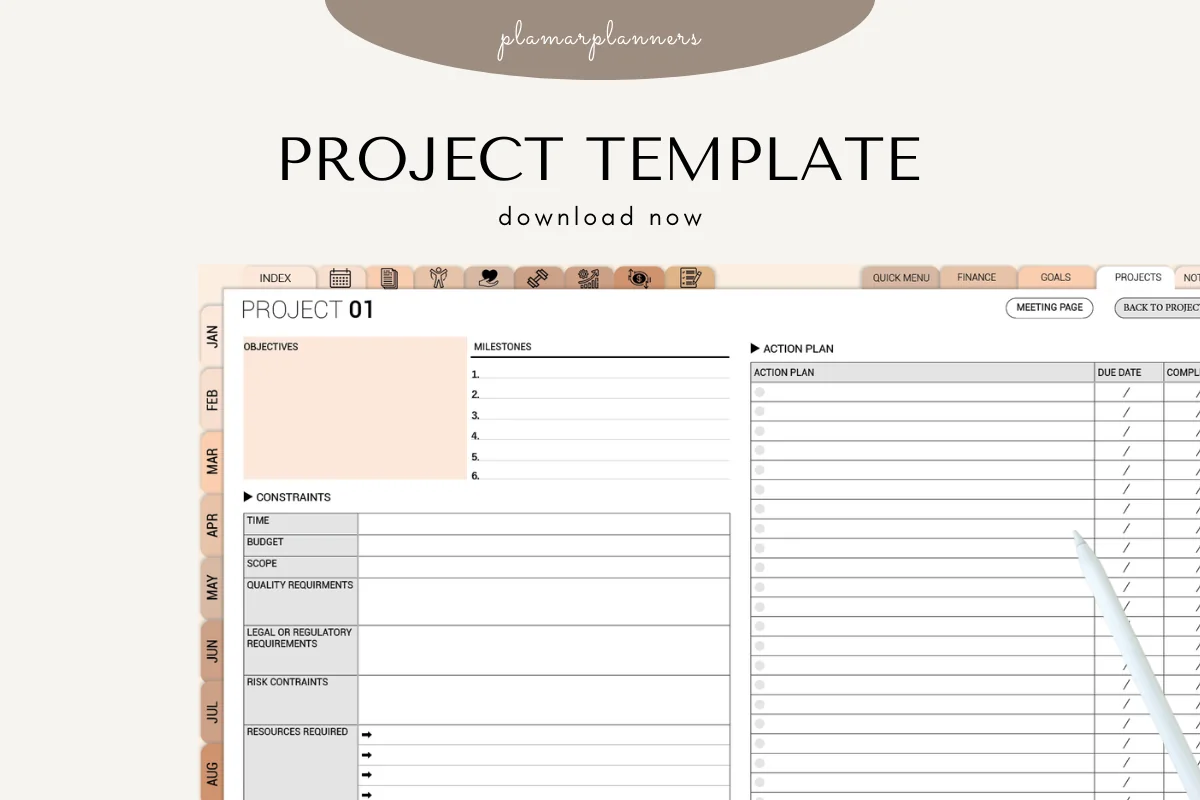
Layouts: Project overview with objectives, constraints, milestones and actions
Best for: keeping a specific piece of work within visible constraints. Designed by Plamarplanners.
- Tablet-friendly PDF version for GoodNotes, Notability or Xodo
- Objectives, milestones and an action plan visible in the overview
- Constraints and resources fields shown
- Four color treatments of the same overview pictured
This is the most structured choice for a defined piece, such as a small craft project with materials and stages to coordinate. The pictured overview brings objectives, constraints, resources and actions onto one layout. Some fields are tight, so expect to zoom while handwriting. Use it for one project overview, with longer practice notes on separate pages. Do not choose it expecting seven distinct layouts or guaranteed clickable tabs.
Best for mixed practice records
2. Digital Notebook
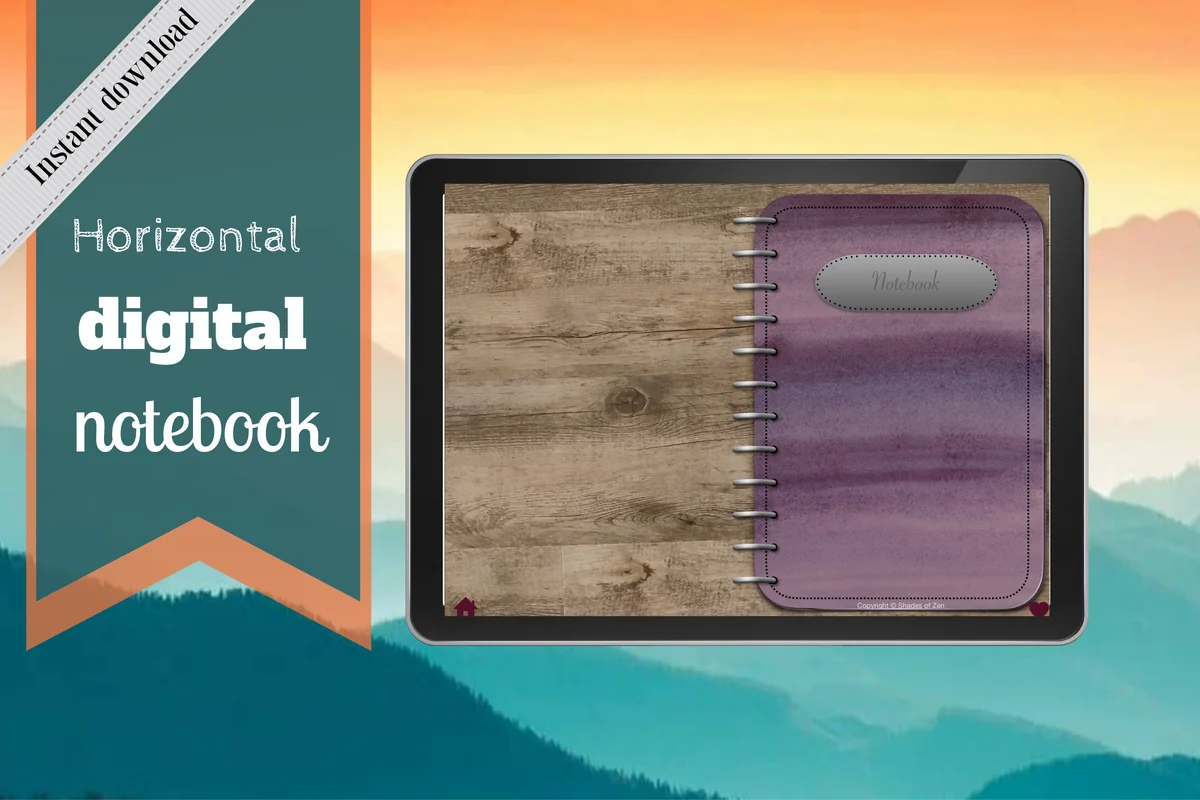
Orientation: LandscapeLayouts: 16 note templates; 12 sections
Best for: photos, trial comparisons and notes in separate sections. Designed by Shades of Zen.
- 12 sections with individual dividers
- 16 note templates, including lined, dot grid, two-column and Cornell options
- GoodNotes and PDF annotation apps named in the description
- Linked section tabs described and pictured
Different hobbies leave different traces. Blank space can hold an image and caption, while a two-column page can compare trials and lined paper can preserve a class explanation. That flexibility makes this notebook my preference when one project overview feels too restrictive. You create the hobby labels and experiment fields yourself; they are not specialist templates included with the product. Its blank and lined layouts give you room to draw those fields or write them as headings.
Best for small session notes
3. Undated Cute Orange Bullet Journal
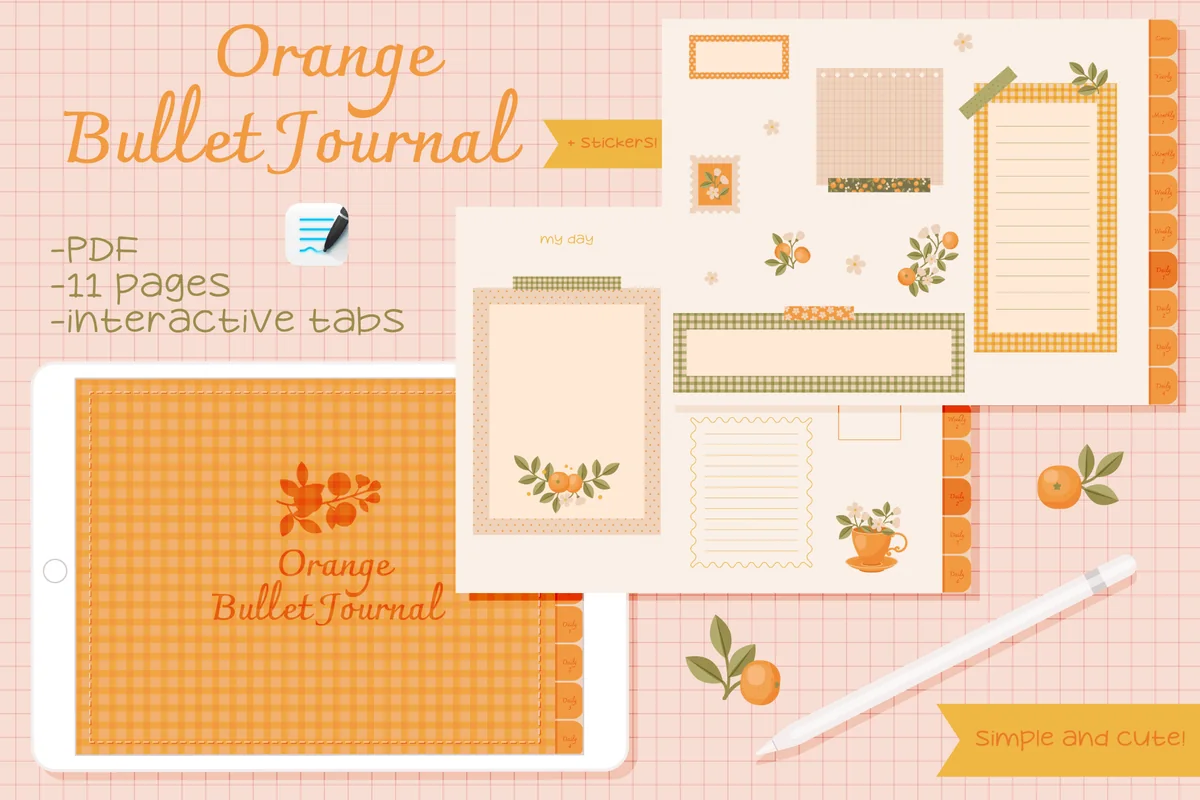
Layouts: Fill-in calendar and decorated writing framesDates: Undated
Best for: brief observations and reminders to return. Designed by digitaliya_studio.
- PDF journal with a GoodNotes import workflow
- Unfilled calendar and decorated note frames shown
- Stickers supplied in GoodNotes format
- Orange, cream and green design across the pictured pages
The small writing areas suit a session bookmark or one sentence about a trial. There is also a fill-in calendar if you want to mark a class or a possible return date. Large reference images and detailed material comparisons will quickly outgrow the frames, so I would keep those on roomier pages. The orange decoration is a style choice, not a hobby feature. This is an optional alternative for short notes; you do not need it alongside either of the other two options.
Quick Comparison
| Option | Structure | Useful for | Keep in mind |
|---|---|---|---|
| 1. Project Planner: Printable & Digital | Project overview | Objectives and action fields | Not a complete hobby diary |
| 2. Digital Notebook | Flexible notebook | Blank, grid and column pages | Add your own hobby labels |
| 3. Undated Cute Orange Bullet Journal | Compact journal | Frames and fill-in calendar | Not for large sample layouts |
FAQ: Hobby Journal Ideas
Can I keep several hobbies in the same journal?
Yes. Start each interest in its own section or give entries clear hobby labels. A single notebook can work if you can find the last relevant page. Split it later only if the subjects compete for space or the structure makes returning harder; there is no requirement to maintain a separate book for every interest.
A book club can have its own section too, with space for the next conversation rather than a record of finished objects. These book club journal ideas organize passage questions, differing interpretations and the decisions to carry into the next meeting.
What if my hobby does not produce a finished object?
Use observations, questions or experiences as entries. For birdwatching, describe what you noticed and keep uncertain identifications marked for checking. For a music hobby, note the passage or exercise you practiced. A finished object is one kind of record, not the condition for having something worth remembering.
For an outdoor observation hobby, returning to the same place gives those open questions continuity. These nature journal ideas show how to keep a dated observation, a sketch and a return question together while leaving uncertain identifications unresolved.
Do I need a photograph for every session?
No. A short note can preserve the detail you need. Use a photograph when a visual comparison, arrangement or temporary stage matters, and caption it so it has context. If taking pictures interrupts the activity, leave the camera aside and write a few words afterward instead.
How is this different from keeping a daily diary?
The organizing question here is what happened in the hobby and what would help you return. A daily diary can range across the rest of your life. For a broader collection of page formats, our digital bullet journal ideas offer another starting point; you can keep the practices separate or let them share a notebook.
Some hobby notes begin with a class, an essay or a reference you want to think through. These commonplace book page ideas give borrowed ideas a source and a separate response, while session records can stay focused on what you tried and where to resume.
Leave a Useful Trace Before You Put Things Away
At the end of the next session, save one detail that would otherwise disappear: the mixture, the row, the reference or the question. Add where to begin when you return. These hobby journal ideas give your interest a memory without requiring a daily habit or a growing pile of finished work. Keep the pages that help you enjoy the next session, and let the rest wait.
Sometimes the next invitation is to try a different activity once, rather than resume an ongoing project. The bucket list journal prompts give that curiosity its own space, with a reason to try it and an after-note before you decide whether it becomes a regular hobby.
You May Also Like
This article contains affiliate links. If you buy through them, I may earn a commission at no extra cost to you. Read the affiliate disclosure.